AI-Powered Game Developer: Master Video Game Creation
Unlock your potential as a video game developer with AI's help. Discover how AI tools simplify game dev, from concept to creation, for aspiring game developers.
July 15, 2026 · Tutorials
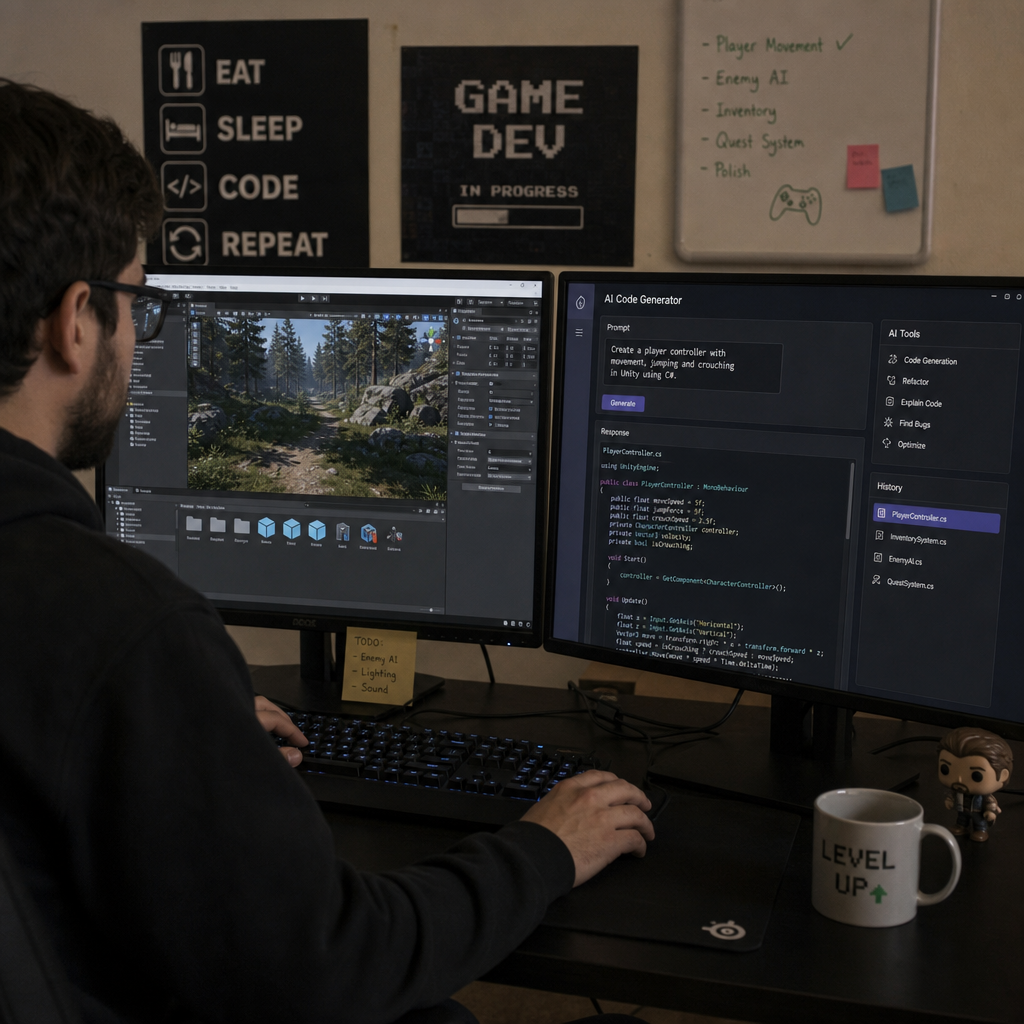
## Become a Video Game Developer Using AI
The dream of creating immersive digital worlds has inspired countless sombreape45@gmail.com [label](https://)players to step behind the screen. Historically, becoming a video game developer required years of specialized training, massive budgets, and a seemingly insurmountable mountain of code. Today, the landscape has fundamentally shifted. Thanks to the rapid advancement of Artificial Intelligence (AI), the barrier to entry has never been lower.
Whether you want to build a cozy farming simulator or a sprawling sci-fi RPG, AI tools are democratizing the creation process. For any aspiring video game developer, these advances reduce costly bottlenecks by accelerating prototyping, content generation, and iteration.
By acting as your co-programmer, concept artist, and sounding board, AI can help you turn your concepts into playable realities faster than ever before.
Let's dive into how you can leverage these modern tools to accelerate your journey, understand the industry ecosystem, and master the skills required to thrive as a modern game developer.
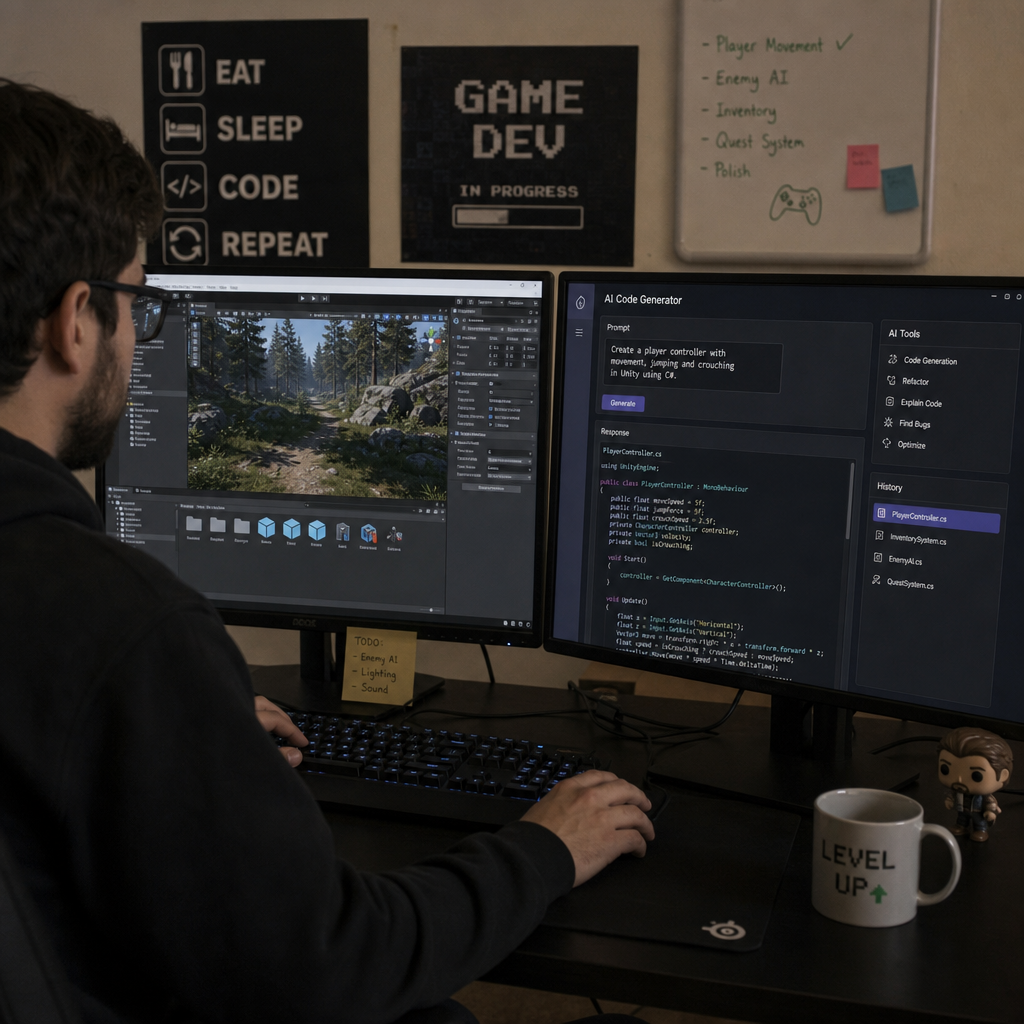
## Decoding the Modern Game Studio Ecosystem
To succeed in game dev, you first need to understand how games are actually made. Gone are the days when a single person had to master every single discipline—though AI certainly makes solo development easier. If you join a studio, you will quickly realize that modern video games are the result of highly specialized collaboration.
Understanding the various roles in a game production team is crucial for figuring out where your passions lie:
- Game Programmers: The engineers who write the code that makes the game function.
- Game Designers: The architects of the game's rules, systems, and overall fun factor.
3D/2D Artists & Animators: The visual creators who bring the world to life.
- Narrative Designers: If you've ever wondered what does a narrative designer do, they are responsible for crafting the story, building lore, and writing the branching dialogue that characters speak. Today, narrative designers often use AI text generators to brainstorm character backstories or quickly draft placeholder dialogue.
- QA Testers: The quality assurance testing career path is an excellent way to get your foot in the door. QA testers hunt for bugs and ensure the game runs smoothly. Increasingly, QA teams are using AI to automate repetitive testing processes, making the job more analytical and less tedious.
## Choosing Your Environment: Indie vs AAA
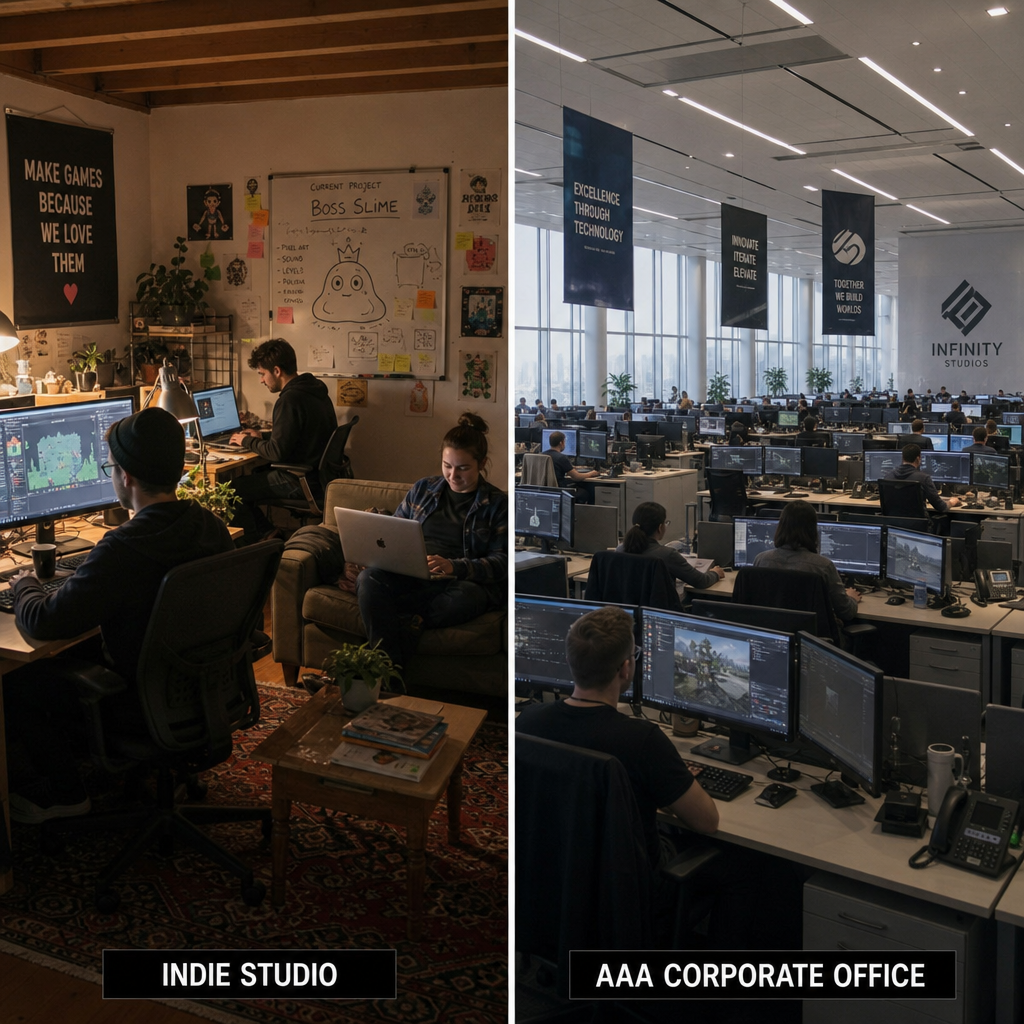
As you map out your career, you'll eventually face a major crossroads: joining an indie game studio vs AAA company.
AAA companies (like EA, Sony, or Ubisoft) offer massive budgets, the chance to work on global blockbuster franchises, and highly specialized roles. However, you will likely be a small cog in a massive machine. Conversely, indie studios offer creative freedom, a tight-knit environment, and the opportunity to wear multiple hats.
One major industry talking point in both environments is managing crunch culture in studios. "Crunch" refers to the grueling, mandatory overtime required to finish a game before launch. Fortunately, AI is playing a major role in combatting this. By automating tedious tasks—like generating background assets, cleaning up code, or populating large open worlds—AI tools are helping game developers reclaim their time, leading to healthier work-life balances across the industry.
## The Core of Creation: Design and Mechanics
If you are wondering how to become a game designer, the first step is learning how to communicate your ideas effectively. A great idea is worthless if you can't explain it to the rest of your team.
Mastering Game Mechanics Documentation
When you begin fleshing out your ideas, you need a Game Design Document (GDD). Following game mechanics documentation best practices is essential. Your GDD should clearly outline the core loop, player controls, win/loss conditions, and progression systems.
- Actionable AI Tip: Use AI chatbots like ChatGPT or Claude to help structure your GDD. You can prompt the AI with your basic ideas, and it can format them into a professional, easily readable document, ensuring you haven't missed any crucial edge cases.
Creating Engaging Environments
Another vital skill is understanding level design principles for beginners. Good level design silently guides the player through a space, using lighting, geometry, and asset placement to teach them the rules of the world. AI procedural generation tools can now help you rapidly block out basic level layouts, allowing you to spend more time refining the player's experience rather than placing individual trees or rocks by hand.
## Building the Foundation: Engines and Software
You cannot build a house without tools, and you cannot build a game without an engine. For any video game developer, modern game making software does the heavy lifting of rendering graphics, calculating physics, and managing audio, allowing you to focus on the creative aspects.
When evaluating your options, the biggest debate usually centers around Unity vs Unreal Engine for new creators:
Unity: Historically the go-to for indie developers and mobile games. It uses C# and has a massive community and asset store. It is incredibly versatile for both 2D and 3D games.
Unreal Engine: Developed by Epic Games, Unreal is famous for pushing the boundaries of high-end, photorealistic 3D graphics. It uses C++ and a visual scripting system called "Blueprints," which allows you to build game logic without writing traditional code.
For any aspiring developer, video games are easiest to prototype in engines that offer robust visual scripting or AI integrations. Both Unity and Unreal now feature AI plugins that can help generate code or streamline animation pipelines.
## Coding and Engineering in the AI Era
While visual scripting is powerful, learning to code will always give you a distinct advantage.
Education and Languages
When looking at educational requirements for game programming, a traditional computer science degree is highly respected, but it is no longer a strict requirement. Bootcamps, online courses, and a strong portfolio can often get you hired. Some curricula even label these tracks as "game on development" or interactive media specializations, so scan course titles carefully.
You will, however, need to learn the essential programming languages for gaming.
- C++: The industry standard for AAA engines like Unreal. It is fast and powerful but has a steep learning curve.
- C#: The language of Unity. It is more beginner-friendly than C++ and incredibly versatile.
- Python: Rarely used for core game engines, but heavily used by technical artists and tools programmers to build studio pipelines.
Enter AI Copilots
Studying software engineering for interactive entertainment has been revolutionized by AI coding assistants like GitHub Copilot. As an aspiring video game developer, you can use AI to explain complex code snippets, auto-complete mundane scripts, or debug errors in real-time. This drastically reduces the time it takes to learn programming fundamentals.
## Art, Assets, and Expanding Your Horizons
Not every developer is a gifted artist, and that is perfectly fine. While you can always utilize free assets, you might also want to look into freelance game art opportunities. Platforms like ArtStation and Upwork are filled with talented freelancers who can design your characters, UI, and environments.
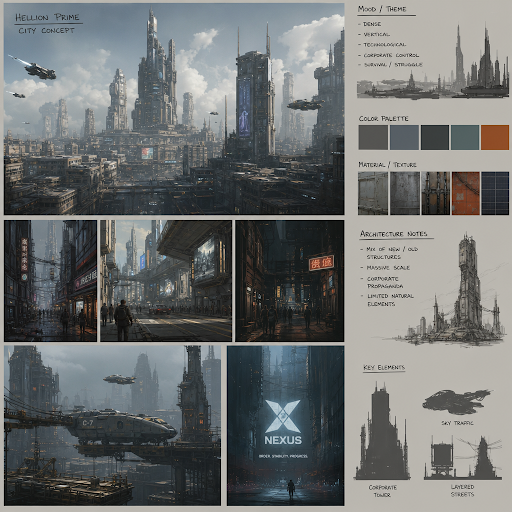
Alternatively, AI art generators like Midjourney or Stable Diffusion are incredible tools for rapid concepting. While the ethics and copyrights of AI art in final commercial products are heavily debated, using these tools to generate mood boards, brainstorm character designs, or create temporary placeholder assets while you put your game on development pipelines is incredibly efficient.
As an indie developer, games you launch will be judged heavily on their visual cohesion. AI can help you find that visual identity long before you spend money hiring a professional 3D modeler.
## Launching Your Career: Portfolios and Paychecks
Once you have learned the software and built your skills, it's time to prove it. In the gaming industry, your portfolio is your resume.
## Crafting a Winning Portfolio
Studios want to see finished, playable projects. Some great game design portfolio examples for beginners include:
1. The Single-Mechanic Prototype: A small game that does one thing perfectly (e.g., a unique grappling hook mechanic).
2. The Grey-Box Level: A fully playable level devoid of final art, proving you understand pacing, flow, and level design.
3. The Narrative Mod: A custom quest built using the modding tools of an existing game like Skyrim or The Witcher 3, showcasing your writing and scripting skills.
Use AI to help write the code for small, complete projects. Participating in "Game Jams" (short 48-hour development competitions) is another excellent way to build your portfolio quickly. When searching job boards and communities, try varied keywords—"video game developer," "game developer," "developer games," or "developer video games"—to catch regional phrasing and broaden your results.
## Understanding Compensation
Before you sign a contract, it is vital to research video game industry salary expectations. Salaries vary wildly based on your location, role, and the size of the studio.
Entry-Level/QA: $40,000 -- $55,000 annually.
Mid-Level Programmers/Designers: $70,000 -- $95,000 annually.
Senior Developers/Leads: $100,000 to $150,000+ annually.
While the pay in gaming can sometimes be lower than standard tech or finance software roles, the trade-off is the profound satisfaction of working on interactive entertainment that brings joy to millions of people.
## Conclusion: Start Creating Today
Becoming a game developer is a journey of continuous learning. The tools will evolve, engines will update, and player tastes will shift. However, the fundamental desire to create engaging, interactive experiences will always remain the same.
By embracing AI as a learning aid, a co-pilot, and an efficiency multiplier, you can bypass much of the traditional frustration associated with early development. Choose your engine, master the basics of design, lean on AI to fill in your knowledge gaps, and start building. The world is waiting to play what you create.
## Q&A
Question: How exactly does AI lower the barrier to becoming a game developer?
Short answer: AI speeds up prototyping, content generation, and iteration by acting as your co-programmer, concept artist, and sounding board. In practice, that means AI chatbots can help structure your Game Design Document, coding assistants can explain code, autocomplete scripts, and debug in real-time, and procedural tools can block out levels so you focus on player experience instead of placing every asset by hand. Studios also use AI to automate tedious tasks like background asset generation, code cleanup, populating large worlds, and repetitive QA testing, which reduces bottlenecks and even helps ease crunch. For art, AI generators are great for mood boards, quick concepts, and temporary placeholders, while final commercial use remains an ethical and legal gray area.
Question: Should I aim for an indie studio or a AAA company, and how is AI affecting crunch culture?
Short answer: AAA studios offer massive budgets, global franchises, and highly specialized roles—great if you want scale and depth in a narrow area. Indie studios provide creative freedom, a close-knit team, and the chance to wear multiple hats—ideal if you want breadth and ownership. Across both, AI is helping combat crunch by automating repetitive, time-consuming work (assets, code cleanup, world population, and aspects of QA), which frees teams to focus on higher-impact tasks and supports healthier work-life balance.
Question: What belongs in a strong Game Design Document, and how can AI assist with early design?
Short answer: A solid GDD clearly outlines the core loop, player controls, win/loss conditions, and progression systems. AI chatbots (e.g., ChatGPT or Claude) can turn rough ideas into a structured, readable document and help you think through edge cases. For level design, remember that good layouts guide players with lighting, geometry, and asset placement; procedural generation tools can rapidly block out spaces so you can refine flow and teach mechanics through the environment.
Question: Which engine and languages should I start with, and do I need a CS degree?
Short answer: Unity (C#, versatile for 2D/3D and mobile, huge community) and Unreal Engine (C++, renowned visuals, plus Blueprints for visual scripting) are top choices; both now offer AI integrations to speed up coding and animation workflows. Learning to code still gives you a clear advantage. A CS degree is respected but not required—bootcamps, online courses, and a strong portfolio can get you hired. Prioritize essential languages: C++ for AAA/Unreal, C# for Unity, and Python for tools and pipelines. AI copilots like GitHub Copilot can explain code, autocomplete boilerplate, and help debug, accelerating how quickly you grasp fundamentals.
Question: How do I build a portfolio that stands out, and what salary ranges should I expect?
Short answer: Show finished, playable work. Strong beginner pieces include a polished single-mechanic prototype, a grey-box level that proves pacing and flow, and a narrative mod for a game like Skyrim or The Witcher 3. Use AI to help ship small complete projects and join game jams to build quickly. When job hunting, vary keywords (“video game developer,” “game developer,” “developer games,” “developer video games”) to broaden results. Typical salary ranges are: Entry-level/QA $40,000–$55,000; Mid-level programmers/designers $70,000–$95,000; Senior/leads $100,000–$150,000+. While pay can be lower than some tech sectors, many value the creative fulfillment of game development.