AI Texture Generator for 3D Models: Unleashing Creativity
Discover how AI texture generators for 3D models revolutionize digital art by automating realistic textures, saving time, and enhancing creativity.
July 16, 2026 · Game Design
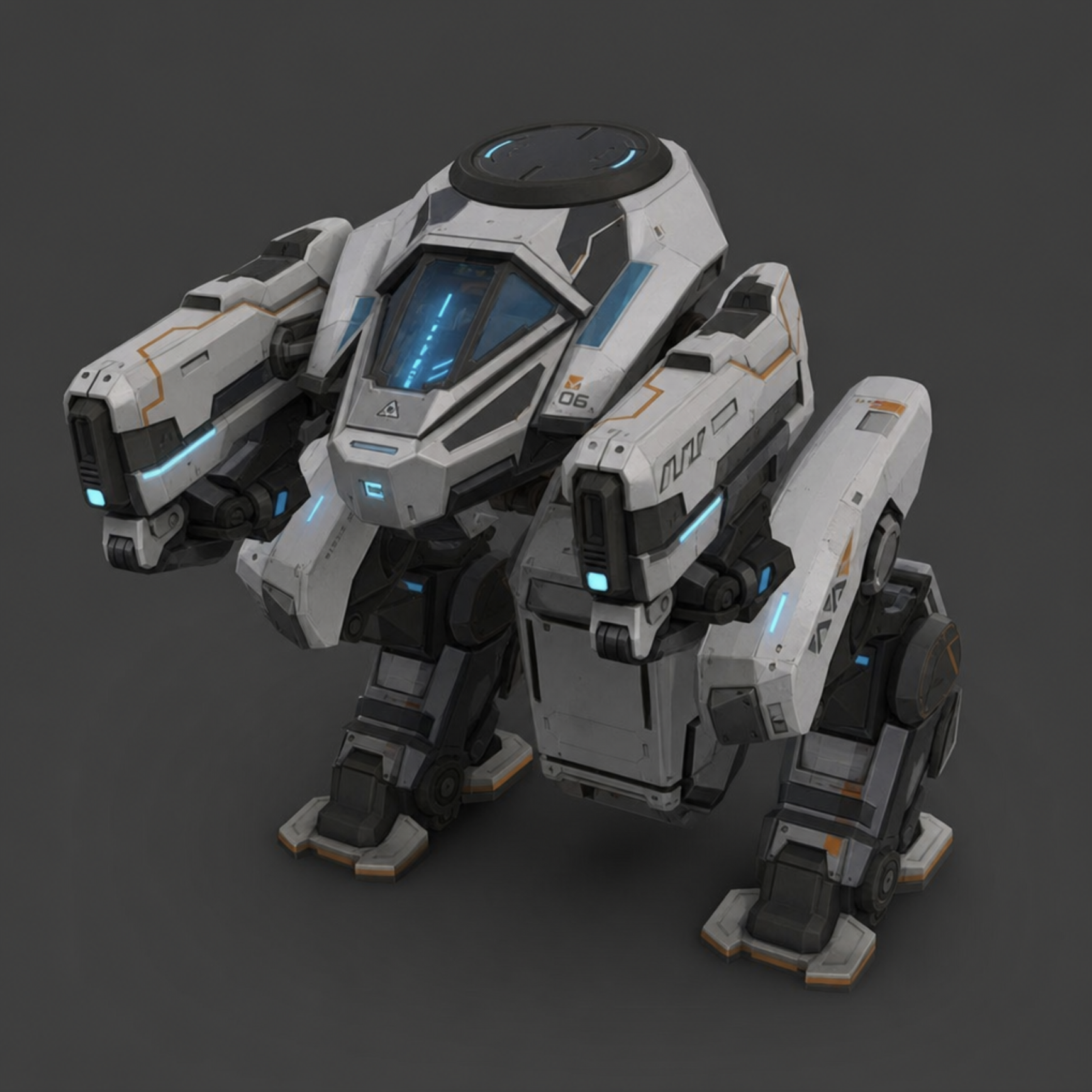
## Exploring the AI Texture Generator for 3D Models
AI texture generators are transforming the world of 3D modeling. These tools automate the creation of realistic textures, saving time and boosting creativity. For many artists, using an AI texture generator for 3D models brings consistent quality to everyday workflows without sacrificing originality.
By using machine learning, they replicate textures from real-world images. This reduces the manual effort traditionally required in 3D modeling, and related tools like a 3D AI image generator can help create references and mood boards that inform texture choices.
The integration of AI with 3D software allows seamless application of these textures to models. This results in more complex and detailed designs.
AI texture generators are not just for professionals. They are accessible to hobbyists, democratizing 3D design, and can even act as a 3D model AI companion that supports learning and experimentation.
As AI technology evolves, its role in 3D modeling will only grow. From early experiments with a 3D AI art generator to production pipelines, this promises exciting advancements in digital art and design.
## What Are AI Texture Generators for 3D Models?
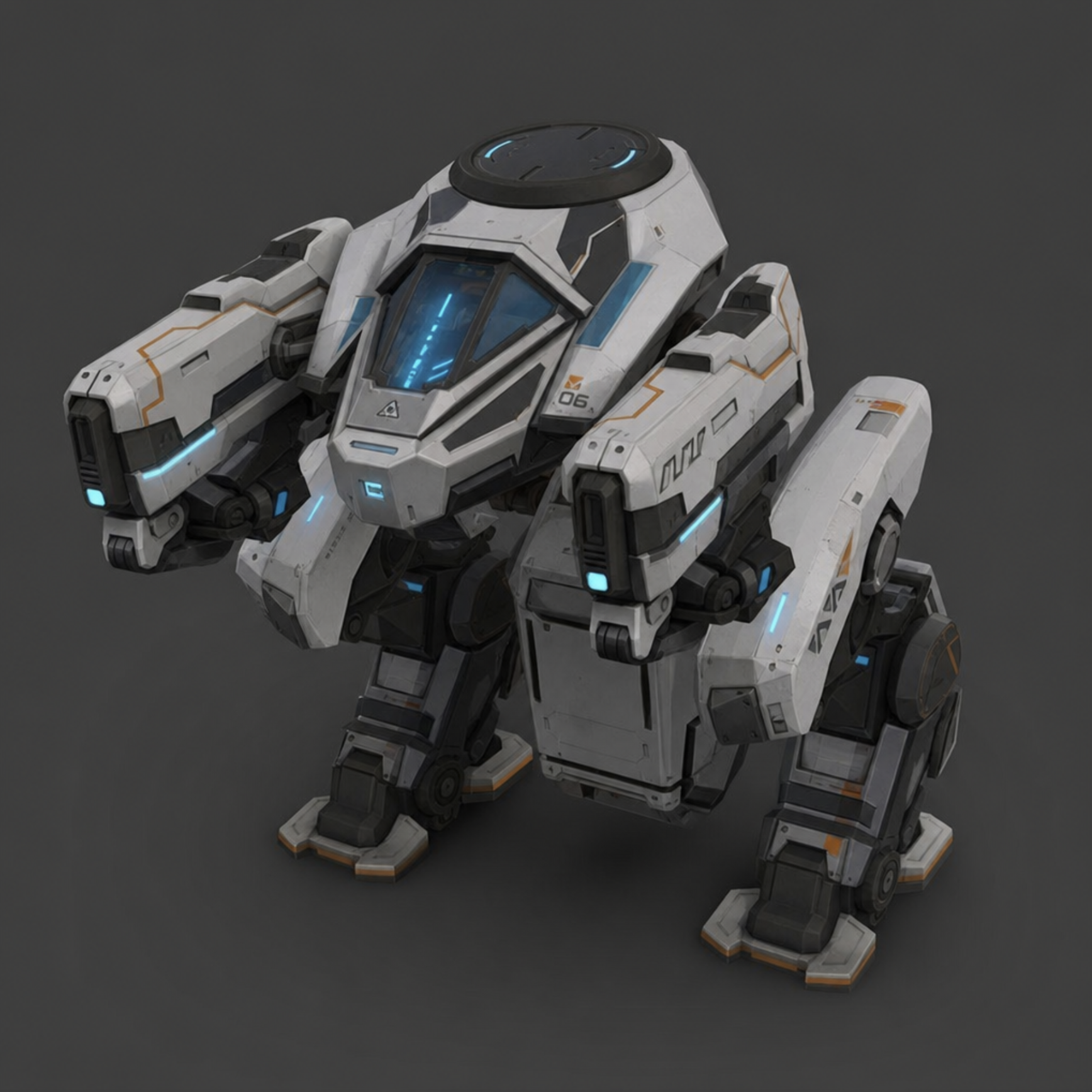
AI texture generators are software tools designed to create textures automatically for 3D models. They leverage machine learning to craft realistic, high-quality textures quickly. When paired with an AI 3D model creator, they streamline asset creation from concept to completion.
These generators analyze images, understand texture patterns, and apply them to 3D surfaces. This process is precise, reducing the risk of errors compared to manual methods, and it supports downstream 3D rendering with consistent material definitions.
Understanding AI texture generators is crucial for modern 3D modeling. These tools can handle complex texture designs that are difficult to achieve manually, working alongside any 3D modeling AI generator to maintain visual coherence across assets.
Key features of AI texture generators include:
- Automation of texture creation
- Ability to mimic various styles
- Fast processing of large datasets
These capabilities make them invaluable in industries like gaming, film, and virtual reality. AI texture generators are versatile, applicable across different projects from stylized art to photorealism, and they complement character workflows supported by an AI 3D character generator.
By facilitating creative freedom, they allow artists to focus more on design rather than repetitive manual tasks. As AI technology continues to improve, these tools will become even more integral to the 3D modeling ecosystem.
## How AI Texture Generators Work: The Technology Behind the Magic
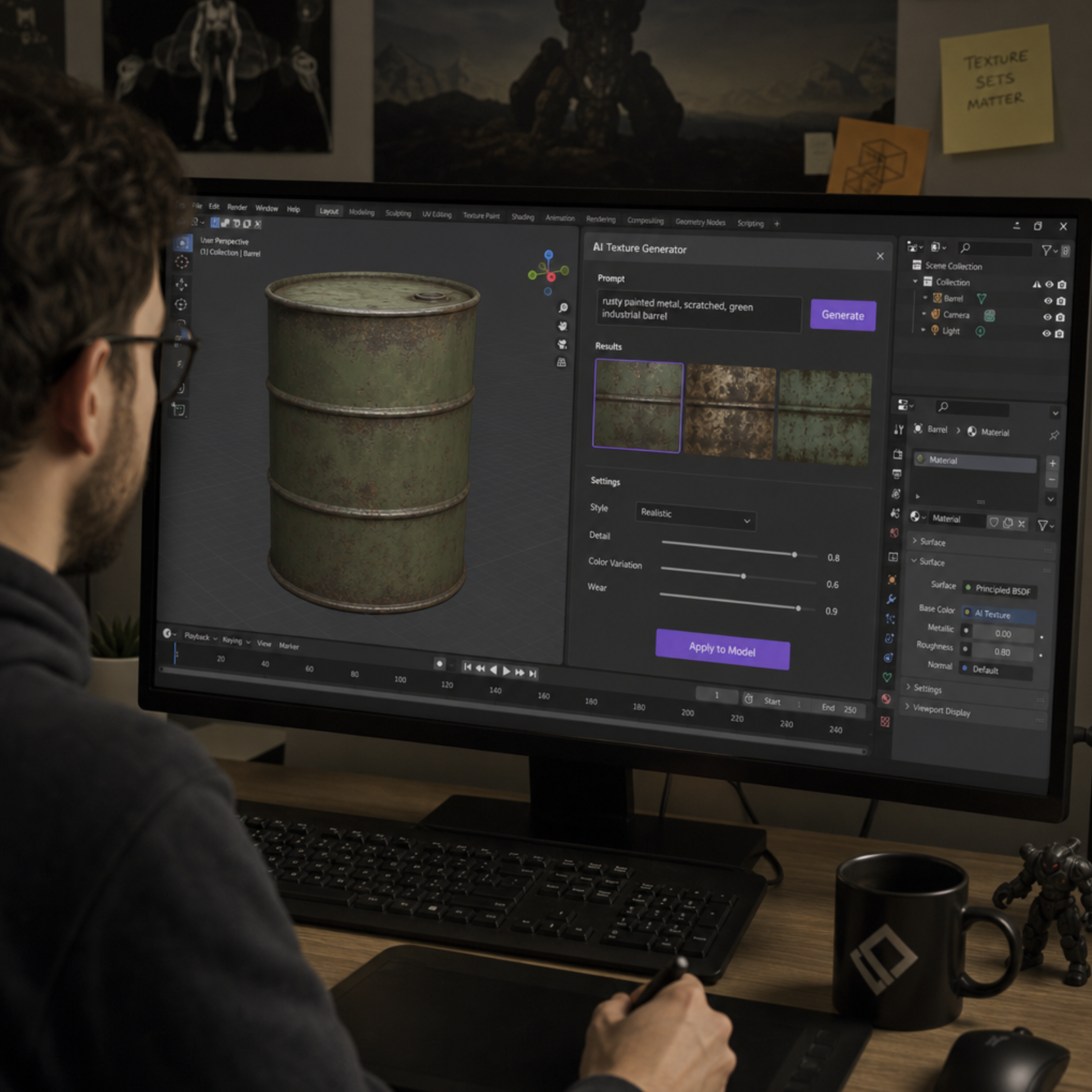
AI texture generators rely on complex algorithms to function efficiently. These algorithms analyze input images and extract key texture features. Whether you feed them scans, procedurally generated maps, or meshes from an AI 3D generator, they learn to produce realistic textures for 3D models.
Machine learning plays a significant role in this process. The models are trained to recognize patterns and understand textures' visual characteristics. This understanding helps them apply textures accurately to 3D surfaces.
Deep learning aids in improving the quality of these textures. It involves layers of neural networks that mimic human perception. These networks enable the generators to replicate intricate details flawlessly.
Key components of AI texture generation include:
- Image recognition
- Pattern analysis
- Neural network training
These components work together to deliver stunning results. The integration of AI into texture generation enables creators to experiment with new styles, whether they originate from scanned assets or a 3D object maker AI. They can achieve effects that were once difficult and time-consuming.
AI texture generators also bring efficiency to 3D modeling workflows. They reduce manual effort by automating repetitive tasks, saving both time and resources. This technology allows for quicker iteration and enhances creativity in digital design, and it coordinates well with an AI 3D model generator for end-to-end production.
The constant evolution of AI ensures that texture generators continue to improve. As technology advances, the scope for artistic expression grows, opening new possibilities in 3D modeling.
by [Resource Database](https://unsplash.com/@resourcedatabase)
## Key Benefits of Using AI Texture Generators in 3D Modeling
AI texture generators revolutionize 3D modeling by offering unprecedented advantages. They automate the laborious process of texture creation, allowing artists to focus on creativity. This innovation reduces the manual effort traditionally required, making workflows more efficient.
One major benefit is speed. AI-driven tools rapidly generate textures that would take hours or even days to create manually. This efficiency accelerates project timelines, helping designers meet tight deadlines.
Quality consistency is another advantage. AI ensures that textures maintain a high level of detail across different models. This uniformity enhances the overall visual appeal of 3D projects.
Artists can also explore new artistic styles with AI texture generators. The technology supports a broad range of styles, from photorealistic to abstract. This flexibility inspires artists to push their creative boundaries.
Key benefits include:
- Enhanced creativity
- Faster project completion
- Consistent texture quality
- Support for diverse styles
Lastly, AI tools contribute to cost savings by minimizing the need for extensive manual labor. They streamline design processes, making high-quality 3D art accessible to more creators than ever before.
by [Logan Voss](https://unsplash.com/@loganvoss)
## Integration with 3D Software and AI 3D Model Generators
AI texture generators seamlessly integrate with popular 3D software, enhancing the design process. This compatibility means textures can be applied directly to models, ensuring a smooth workflow. Artists save time by avoiding tedious manual transfers.
These tools also work in tandem with AI 3D model generators, forming a powerful combination. The synergy allows the generation of both models and textures within the same environment. Whether your pipeline includes an AI 3D model generator, a 3D modeling AI generator, or a 3D object maker AI, texture mapping remains consistent and reliable.
By collaborating with an AI 3D render generator, texture generators enhance the final output quality. They optimize aspects such as lighting and shading, elevating the realism of digital content. This cooperation results in superior visual experiences.
Integration benefits include:
- Seamless workflow
- Time-saving processes
- Enhanced final output quality
- Streamlined model and texture creation
Moreover, AI texture generators easily adapt to different 3D model programs, offering flexibility. They fit into various workflows without requiring extensive adjustments or customizations, ensuring they meet the unique needs of different projects (in virtually any 3D model program). Some teams treat the texture system as a 3D model AI companion alongside an AI 3D model creator or 3D model maker AI for a cohesive toolchain.
by [Google DeepMind](https://unsplash.com/@googledeepmind)
## Popular AI Texture Generator Tools and Platforms
The market offers a range of AI texture generator tools that cater to various needs. These platforms provide artists with robust features to create and apply textures efficiently. Each tool has unique capabilities tailored for different creative processes.
Substance Alchemist by Adobe is a favorite among 3D artists. It offers deep customization and a vast library of pre-made textures. Its AI-driven approach allows for quick, realistic texture creation.
Quixel Mixer provides an alternative with a focus on photo-realism. It integrates seamlessly with 3D software, making it a valuable asset in realistic rendering projects. The tool is known for its user-friendly interface and comprehensive functionalities.
Other tools like Artomatix and Deep Paint 3D offer unique features. Artomatix leverages neural networks to produce complex patterns. Meanwhile, Deep Paint 3D specializes in painting directly on 3D models, enhancing precision.
Here's a list of popular platforms:
- Adobe Substance Alchemist
- Quixel Mixer
- Artomatix
- Deep Paint 3D
These tools greatly contribute to the richness and realism of 3D models. By offering distinct functionalities, they accommodate a wide array of artistic requirements.
Such platforms continue to evolve, bringing new possibilities to the forefront of digital creation. Their advancements ensure artists have the best tools at their disposal.
## ForgeGUI: A Powerful Tool for Texture Generation
ForgeGUI is an innovative platform that empowers 3D artists with a suite of tools designed for the creation and manipulation of textures. Known for its user-friendly interface, ForgeGUI simplifies the texture generation process, making it accessible for both beginners and seasoned professionals. It integrates seamlessly with various 3D modeling software, allowing users to effortlessly apply textures to their models.
One of the standout features of ForgeGUI is its extensive library of customizable textures, which can be manipulated in real-time. Artists can experiment with different styles and effects, enabling them to create unique textures tailored to their projects. Additionally, ForgeGUI employs advanced algorithms to ensure high-quality outputs that maintain consistency across different applications.
With a focus on collaboration, ForgeGUI also offers community-driven resources, where artists can share their creations and gain inspiration. This collaborative environment enhances the learning experience, facilitating the exchange of tips and techniques among users. As ForgeGUI continues to evolve, it solidifies its position as a vital tool in the arsenal of modern 3D artists.
## Applications: Where AI Texture Generators Shine
AI texture generators find their use across numerous industries. They enhance the digital artistry process, making it more efficient. These tools have broad applications that redefine creativity.
Game development benefits greatly from AI-generated textures. The realism and detail they offer enrich gaming environments. Players enjoy more immersive experiences due to lifelike visuals, and character pipelines can pair an AI 3D character generator with texture tools for faster iteration.
In film production, AI textures bring CGI elements to life. Movies can achieve higher levels of realism with detailed digital worlds. This technology supports the creation of stunning visual effects.
Virtual reality and augmented reality also utilize AI texture generators. These technologies require high-fidelity visuals for full immersion. AI tools ensure textures are both accurate and scalable.
Beyond entertainment, AI textures are valuable in architectural visualization. They provide realistic previews of design concepts. This aids architects in presenting detailed and convincing designs.
Some prominent applications include:
- Game development
- Film and animation production
- Virtual and augmented reality
- Architectural visualization
AI texture generators are transforming how industries produce digital content. Their versatility opens new frontiers in artistic expression. These applications highlight the transformative impact of AI technology in 3D modeling.
by [Google DeepMind](https://unsplash.com/@googledeepmind)
## AI Texture Generators and the Future of 3D Modeling
AI texture generators are revolutionizing the 3D modeling landscape. The technology's rapid evolution opens doors to previously unimaginable possibilities. Artists and designers now have new tools to unleash creativity.
AI-driven innovations extend beyond generating textures. They assist in refining 3D models and optimizing rendering processes. This integration leads to seamless workflows and enhanced productivity.
The future of 3D modeling is inextricably linked with AI advancements. New AI tools will likely deliver more intuitive user experiences. Artists can expect to explore diverse styles with greater ease.
As AI technology grows, the quality of 3D models continues to improve. This progress promises more lifelike and detailed virtual creations. It also supports more complex and immersive digital worlds.
Key developments shaping the future include:
- Enhanced realism in 3D art
- Streamlined workflows through AI integration
- Expansion of creative possibilities
- Increased accessibility to sophisticated tools
These trends indicate a promising trajectory for digital art and design. AI texture generators are paving the way for innovation in 3D modeling.
by [Bee](https://unsplash.com/@bee_bee_bee)
## Getting Started: Tips for Artists and Designers
Diving into AI texture generators can be exciting yet daunting. It's crucial to familiarize yourself with the tools available. Start with user-friendly platforms that provide guided tutorials.
Experimentation is key to mastering AI tools. Try applying various textures to different 3D models. This practice helps in understanding how AI enhances your design process. Consider pairing your workflow with a 3D model maker AI to speed up asset creation before texturing.
Keep in mind these essential tips:
- Choose tools compatible with existing 3D software.
- Leverage online communities for support and insights.
- Regularly update AI tools for optimal performance.
Stay open to learning and adapting. AI technology is constantly evolving, offering new features and capabilities. By embracing a flexible approach, you'll maximize the potential of AI texture generators in your projects. Remember, patience and practice go a long way in achieving creative success.
## Conclusion: Embracing AI in 3D Art and Design
AI texture generators are transforming 3D art and design. They offer artists new ways to enhance creativity and streamline workflows. The technology makes high-quality textures accessible and easy to implement.
For designers, the shift to AI-driven tools opens up new possibilities. It allows for more intricate designs with less manual effort. AI supports both beginners and seasoned professionals in achieving remarkable results.
As AI technology continues to progress, its impact on 3D modeling grows. It is reshaping how art is created and experienced. This evolution offers exciting opportunities for future innovation and experimentation.
Embracing AI in 3D modeling is not just a trend; it's a gateway to future development. By integrating an AI texture generator for 3D models, artists can push the boundaries of their creative expression, unlocking potential and redefining digital art landscapes.