ForgeGUI: Game Design's #1 AI Platform
Unlock creativity with ForgeGUI, the #1 AI design platform for game developers. Streamline asset creation and coding, enabling seamless game design.
July 17, 2026 · Product News
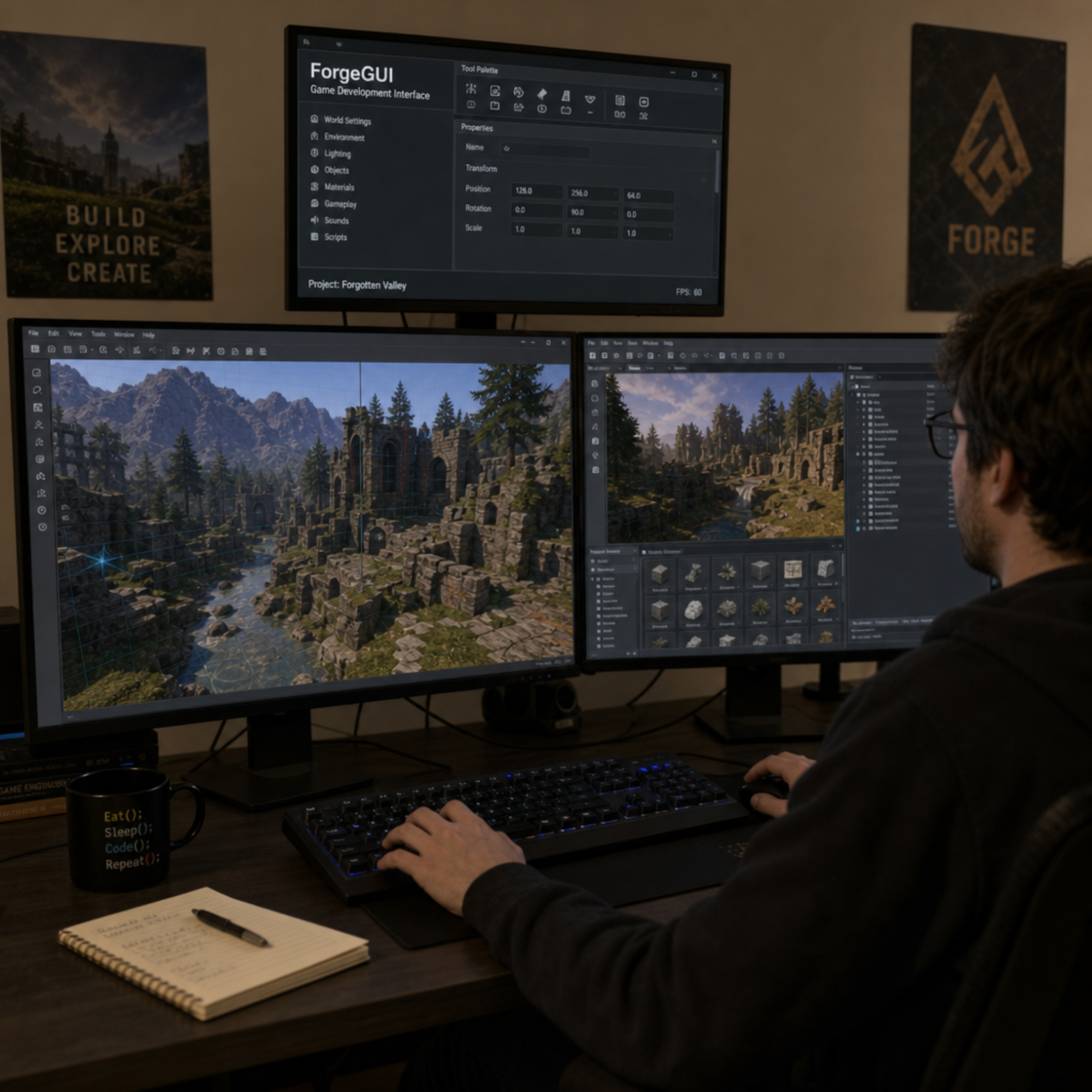
## ForgeGUI - The #1 AI Design Platform For Game Developers
The landscape of interactive entertainment is undergoing a massive, foundational shift. Not long ago, building a rich, immersive virtual world required the backing of massive studios, multi-million dollar budgets, and years of gruelling crunch time. Today, the rise of the ai game creator is completely leveling the playing field. For developers looking to streamline their pipeline and unlock unprecedented levels of creativity, innovative interfaces like ForgeGUI - The #1 AI Design Platform For Game Developers - are acting as the ultimate bridge between human imagination and machine efficiency.
If you are currently exploring ai for game development, understanding how to leverage an intuitive graphical interface to manage complex, underlying machine learning algorithms is absolutely crucial. ForgeGUI is designed to be the connective tissue in your tech stack, giving you precise control over automated systems without requiring a PhD in data science.

## The Evolution of Development: Enter the AI Era
For decades, the standard pipeline for creating video games has been rigid. Concept art, 3D modeling, rigging, coding, and playtesting functioned in strict, isolated silos. Today, developers are frequently analyzing ai tools vs traditional game engines to figure out where the industry is heading next.
While heavyweights like Unreal Engine and Unity remain the undisputed backbone of the industry, they are increasingly being augmented—and sometimes bypassed—by intelligent, generative systems. The future of video game design isn't about replacing the human developer; it's about eliminating the tedious, repetitive aspects of production. A powerful game maker ai acts as a tireless co-pilot. It handles the heavy lifting of boilerplate code and repetitive asset generation, allowing developers to focus deeply on core gameplay loops, mechanics, and emotional resonance.
## What is ForgeGUI? A New Paradigm in Design
What exactly does ForgeGUI bring to your development desk? Think of it as a centralized, highly-optimized command center for ai game design . Instead of bouncing between a dozen disconnected web apps, local Python scripts, and command-line interfaces, developers can use ForgeGUI as a comprehensive ai game generator.
This platform optimizes the workflow for ai integrated game design by bringing asset generation, script assistance, and logic mapping under one unified roof. For solo creators and small teams, this means that developing indie games with minimal coding is no longer a pipe dream—it's a practical, everyday reality.
## Bridging the Gap with No-Code Solutions
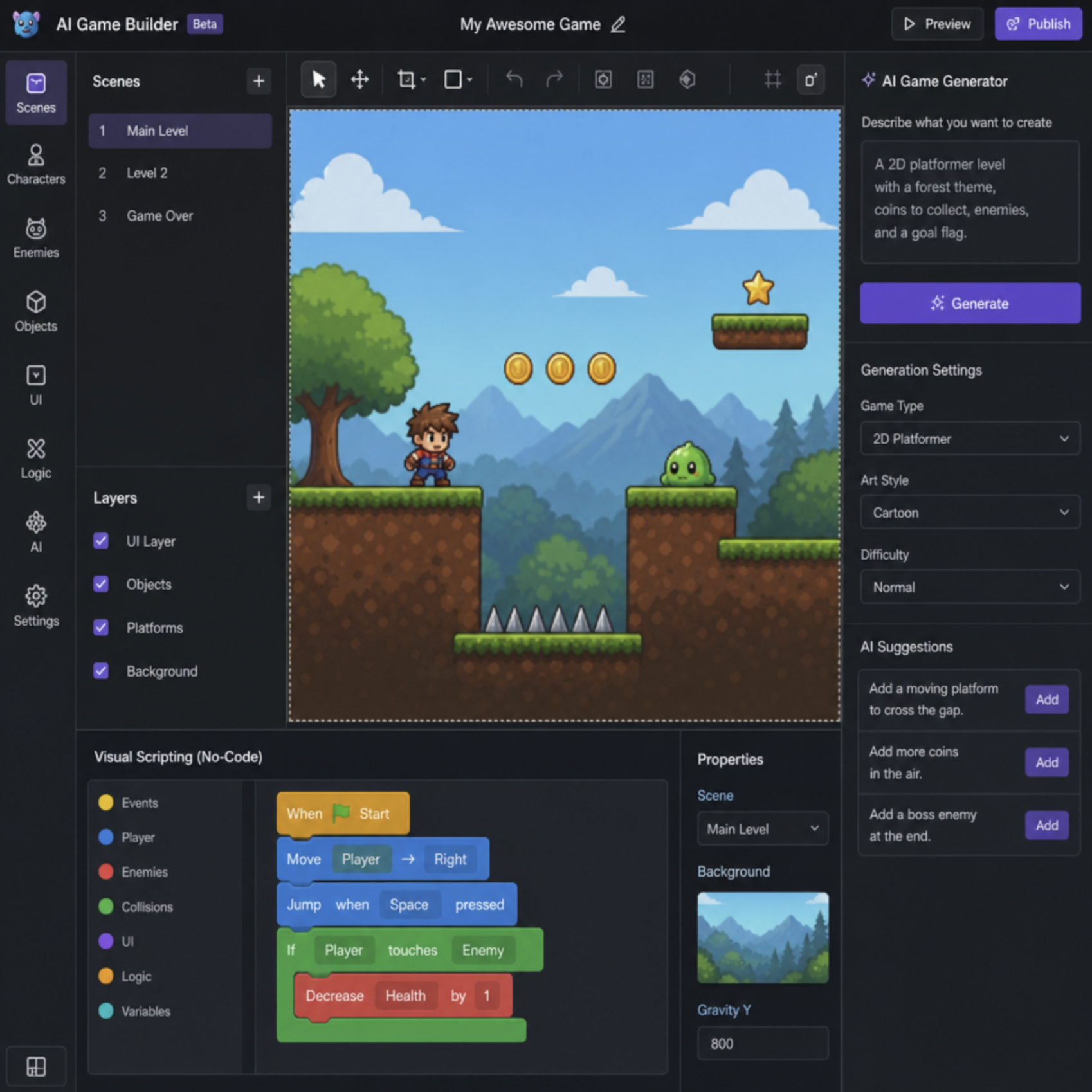
Many aspiring creators and seasoned artists constantly wonder how to make a game with artificial intelligence without getting bogged down in complex API integrations and backend architecture. ForgeGUI interfaces beautifully with modern no-code game development platforms. Through intuitive visual node systems and drag-and-drop mechanics, you can seamlessly pull AI-generated components directly into your active scenes, bridging the gap between raw algorithmic generation and playable interactivity.
## Accelerating Asset Creation and World Building
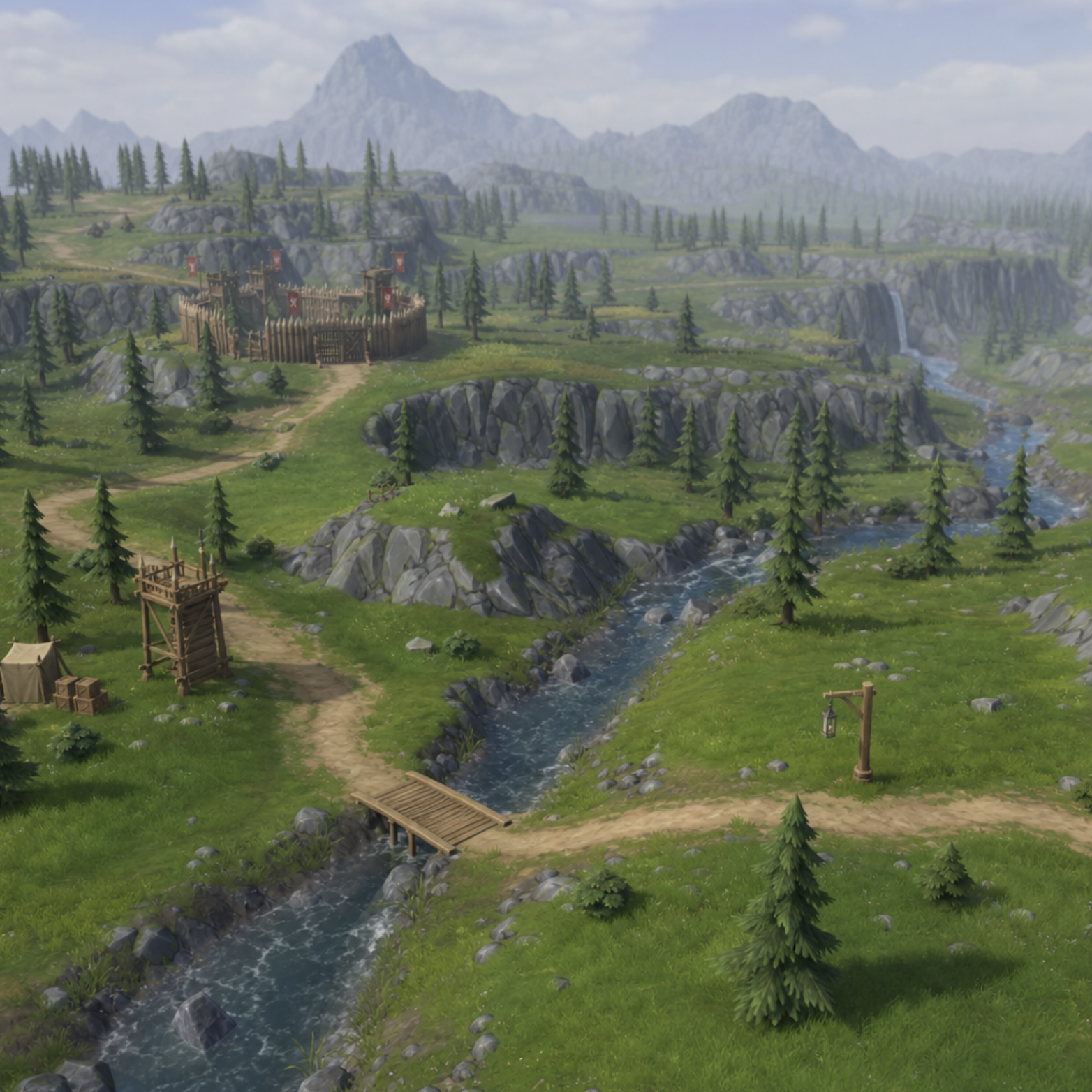
World-building is notoriously time-consuming. Traditionally, modeling every rock, tree, and building in a sprawling RPG or open-world survival game took thousands of hours of manual labor. Now, an integrated ai game maker 3d within your workflow can generate vast, believable terrains in a matter of minutes.
By utilizing advanced procedural content generation techniques, developers can set specific environmental parameters in ForgeGUI—such as biome type, density, and color palette—and let the engine populate the world organically. But it doesn't stop at terrain.
Creating 3d models with generative algorithms allows for incredibly rapid prototyping. Instead of relying purely on generic, store-bought assets that make your game look like an asset flip, you are building game assets using machine learning that are tailored specifically to your project's unique artistic vision.
Actionable Workflow for 3D Assets in ForgeGUI:
- Prompting the Base: Input descriptive text (e.g., "gothic sci-fi energy weapon") to generate initial 2D concept art via connected image models.
- Mesh Generation: Use ForgeGUI's 3D generation plugins to extrude and build a base mesh directly from the concept art.
- Texture Automation: Apply AI-driven material generators that automatically map out diffuse, normal, and roughness maps based on real-world material properties.
- Optimization: Run the mesh through an AI retopology tool to ensure the polygon count is game-ready and performance-friendly.
## Breathing Life into Code and Logic
The visual layer is only half the battle when making a game. A digital world needs interactivity, logic, rules, and life. A very common question among traditional programmers and technical artists is: can ai write game code?
The answer is a resounding yes, though it thrives best with human oversight. ForgeGUI allows you to prompt the AI to generate boilerplate C#, C++, or Python scripts. Need a state machine for an enemy? A dynamic inventory sorting algorithm? A custom shader for a waterfall? The AI can output the foundational code in seconds, complete with comments and variables tailored to your game's specific naming conventions. You can then review, tweak, and implement the code, cutting your programming time in half.
### Next-Gen Non-Player Characters
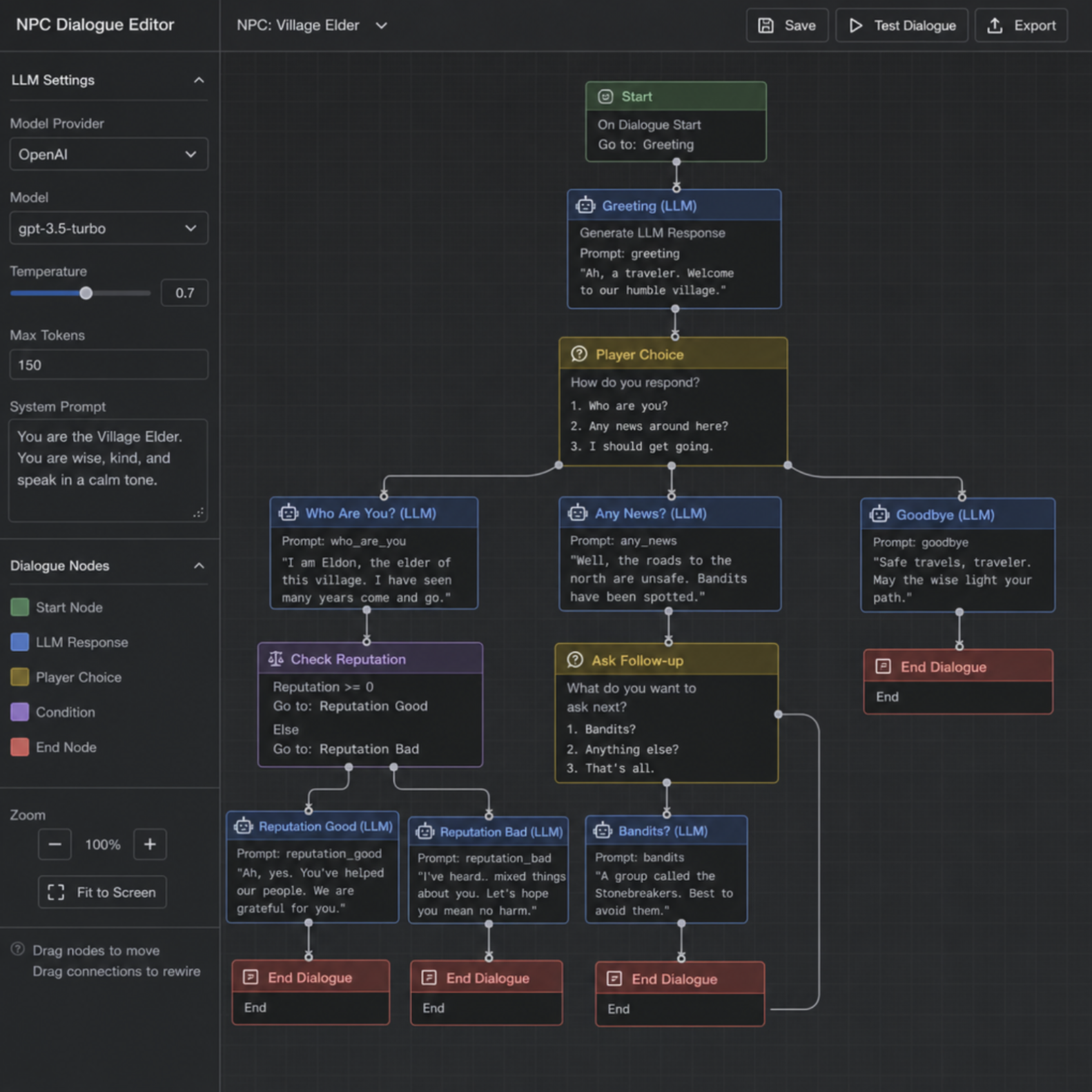
Beyond raw coding, AI is fundamentally transforming how players interact with digital worlds. Historically, NPCs (Non-Player Characters) have been little more than walking signposts with a few lines of repeating dialogue. By implementing automated non-player character behavior, NPCs can now react dynamically to the player's choices, the time of day, or the current state of the game world, rather than simply following rigid, pre-programmed pathfinding nodes.
Furthermore, integrating large language models for npc dialogue ensures that no two conversations are exactly the same. Instead of clicking through a static dialogue tree, players can type or even speak their responses through their microphones. When this is combined with natural language processing for interactive storytelling, the game engine can actually understand the semantic meaning behind the player's words.
Imagine a detective game where you literally have to interrogate a suspect using your own intuition, and the NPC responds with defensive, AI-generated dialogue based on their hidden "guilt" parameter. This level of immersion was impossible five years ago.
## Curating Your Toolkit: Best Practices and Tips
Integrating these cutting-edge technologies into a cohesive pipeline requires tact and strategy. While the software market is currently flooded with experimental tools, identifying the best generative ai tools for game development is essential for maintaining a high standard of quality. ForgeGUI helps curate and connect these top-tier APIs seamlessly, but as a developer, you must still guide the ship.
Practical Tips for Using AI in Game Dev:
- Start Small: Don't try to build an AI-driven MMORPG for your first project. Use ai for game dev to create smaller, tightly scoped indie games—like a puzzle game with dynamically generated levels—to understand the limitations and strengths of the tech.
- Use AI for Iteration, Not Final Polish: Rely on generative tools for the "block-out" phase. Let the AI generate the base layout of a dungeon, and then use your human intuition to add the final lighting, enemy placement, and narrative clues.
- Maintain a Cohesive Style: AI models can sometimes produce visually inconsistent results. Train your local models or use strict style-guide prompts within ForgeGUI to ensure a unified aesthetic across your game.
## Building a Responsible AI Ecosystem
While the technical capabilities of ForgeGUI and similar platforms are staggering, pushing the boundaries of technology brings up vital industry discussions that cannot be ignored. Using ai for game development is a powerful privilege that demands responsibility.
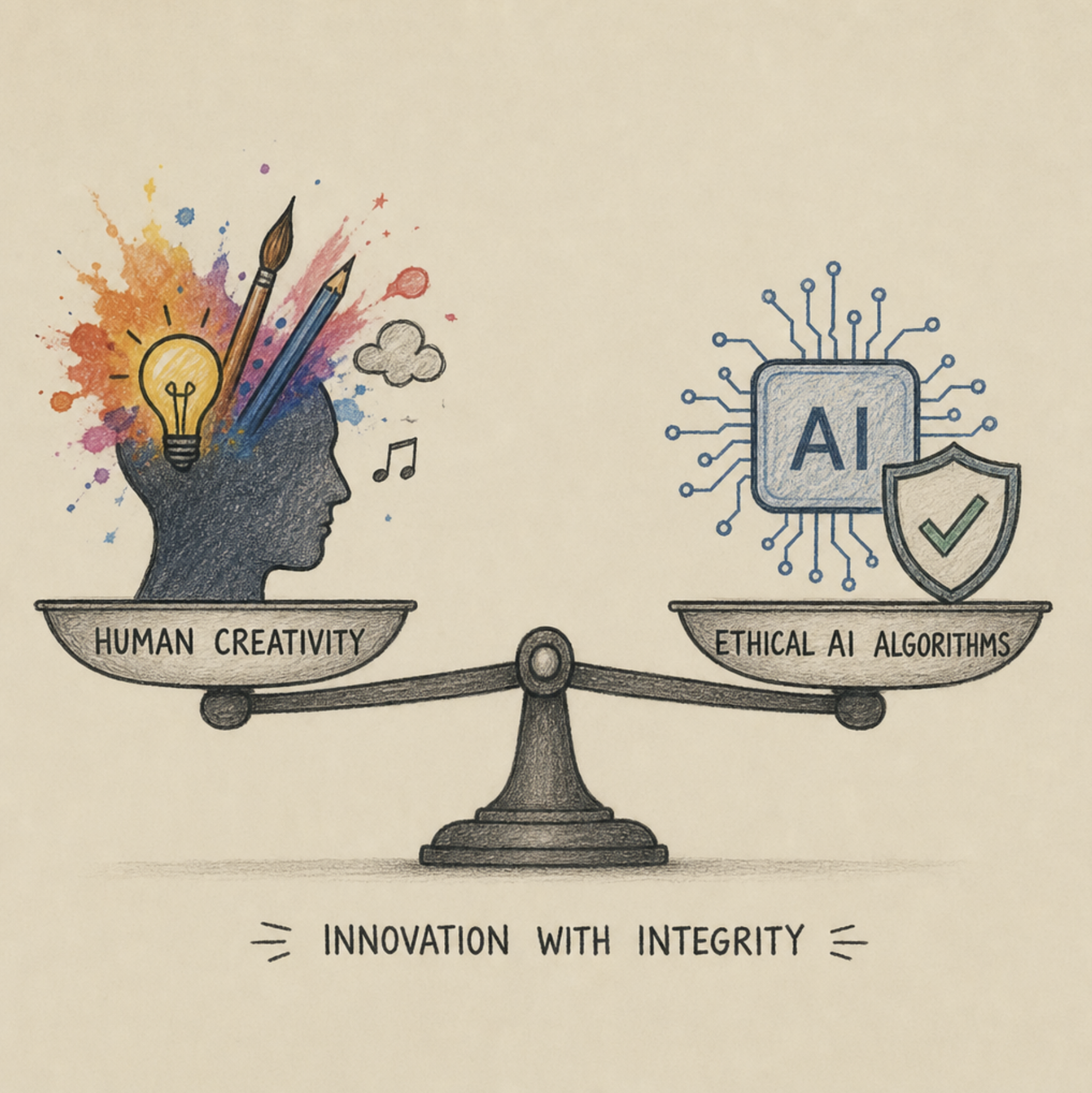
As developers, we must carefully navigate the ethical considerations of ai generated art in gaming. This means being critically aware of the data sets that train the models we use. Are the image generators trained on copyrighted art without permission? Are the voice synthesis models mimicking real voice actors without compensation?
To build a sustainable future for the industry, developers should prioritize platforms and tools that are transparent about their training data. Furthermore, honesty with your player base is paramount. If your game relies heavily on procedural generation or LLM-driven dialogue, market it as such. Gamers are incredibly receptive to innovative technology when developers are transparent about how it is used. Ethical AI usage doesn't stifle creativity; it ensures that your game is built on a foundation of respect for the wider artistic community.
## Conclusion: The Future is in Your Hands
The era of the lone developer spending five grueling years locked in a basement to produce a single, simple platformer is rapidly evolving. The barrier to entry for world-class game creation has never been lower. Tools like ForgeGUI are unlocking unprecedented creative potential, democratizing game design for anyone with a compelling idea and the drive to learn.
Whether you are looking to streamline your 3D asset creation, draft intricate lines of code in seconds, or revolutionize the way players interact with characters through natural language processing, the modern AI toolkit is ready to assist. By embracing these systems responsibly and thoughtfully, you aren't just making a game faster—you are fundamentally expanding the boundaries of what interactive entertainment can be. Dive in, experiment with the algorithms, and start building the worlds you've always dreamed of.