How to Make a Game: Steps, Tools, & AI Integration
Learn how to make a game with this comprehensive guide covering design, ai game engines, and tools for video game creation. Start building your universe today!
July 20, 2026 · Product News
## How to Make a Game: Essential Steps
Have you ever played a masterpiece that kept you up until dawn and wondered how to make a game that captivates others in the exact same way? Transforming a brilliant idea into a playable reality is one of the most rewarding creative endeavors you can undertake. Thanks to modern technology, the barriers to entry have never been lower. Whether you dream of launching a massive multiplayer RPG or a cozy indie puzzler, modern video game creation is highly accessible to anyone with a computer and dedication.
However, the journey from a blank screen to a completed project requires structure.
Understanding the entire video game development lifecycle will save you from endless frustration, scope creep, and unfinished projects.
Here is a comprehensive guide detailing the essential steps to bring your gaming vision to life.
Summary
This guide walks through the full game development lifecycle: shaping a clear vision and GDD, choosing the right engine and game development tools (including emerging AI options), implementing mechanics via code or visual scripting, and crafting art, audio, UI/UX, and levels. It emphasizes small prototypes, strong level-design principles, and rigorous playtesting/QA to refine the core loop. You'll also learn publishing, monetization, and pricing paths across platforms, plus marketing tactics like devlogs, short-form video, community-building, and wishlist growth. With structure and iteration, you can turn an idea into a polished, market-ready game.

## Step 1: Conceptualization and Design
Every great project starts with a solid foundation. Before you write a single line of code or draw a single sprite, you need a clear vision.
### Crafting Your Vision
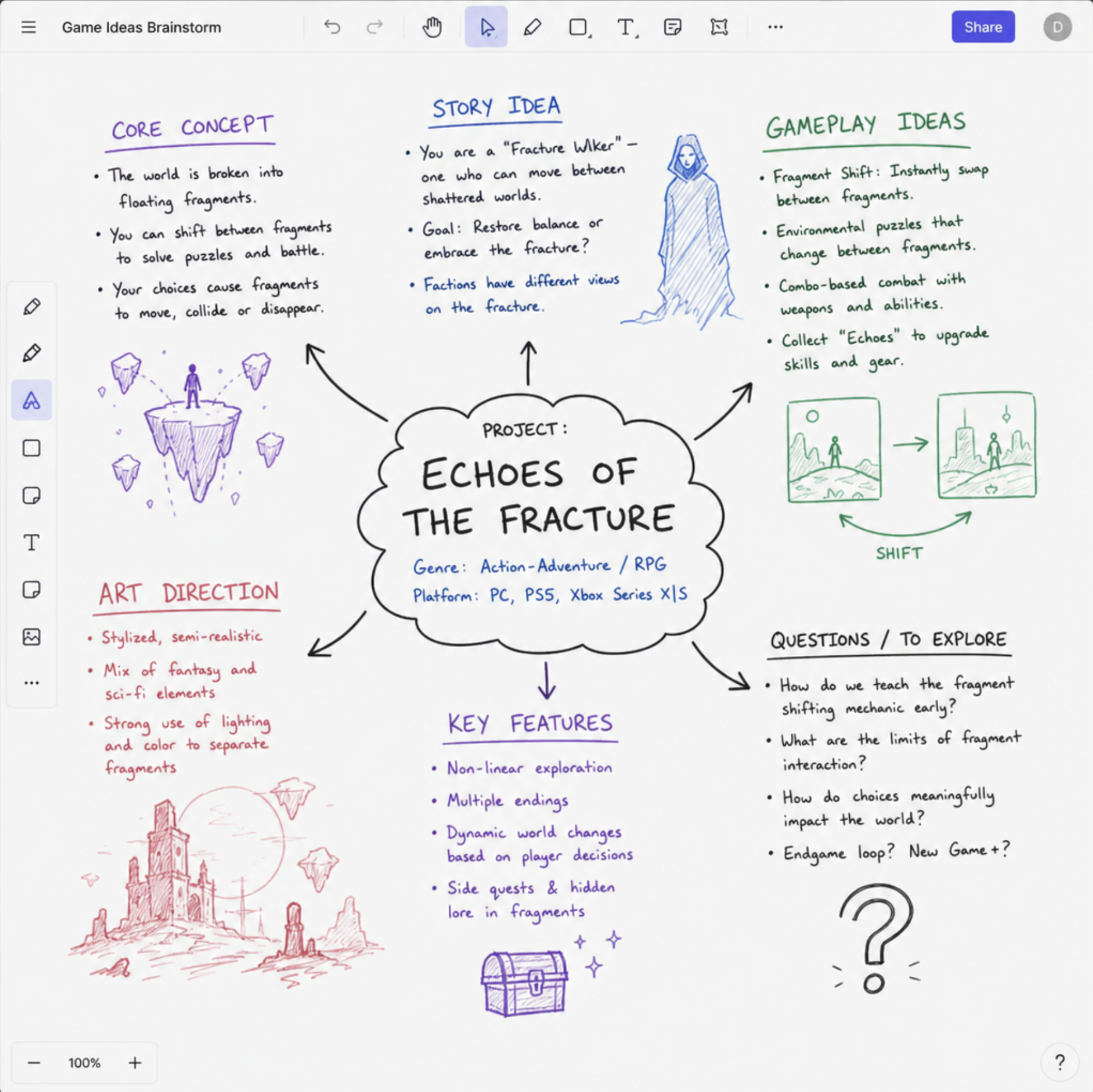
Start by brainstorming your core concept. Focus heavily on world building and character development to ensure your players have a compelling universe to explore and avatars they actually care about. What is the central conflict? What makes your universe unique?
Next, outline your game mechanics and systems design. This involves defining the rules of your digital world. Will it rely on turn-based combat, physics-based puzzles, or real-time strategy? Understanding how these systems interact early on will dictate the tools you need to succeed.
## The Game Design Document (GDD)
To keep your project on track, organize your ideas using a game design document template. A GDD acts as the master blueprint for your project. It should include:
- Core loop: The primary actions the player repeats (e.g., fight monsters, get loot, upgrade gear).
- Story outline: Key narrative beats and lore.
- Art style: Concept art, color palettes, and visual tone.
- Technical requirements: Platform targets (PC, mobile, console) and required software.
## Step 2: Choosing Your Game Engine and Tools
A game engine is the software framework you use to build your project. Selecting the right one is crucial.
### Traditional Engines
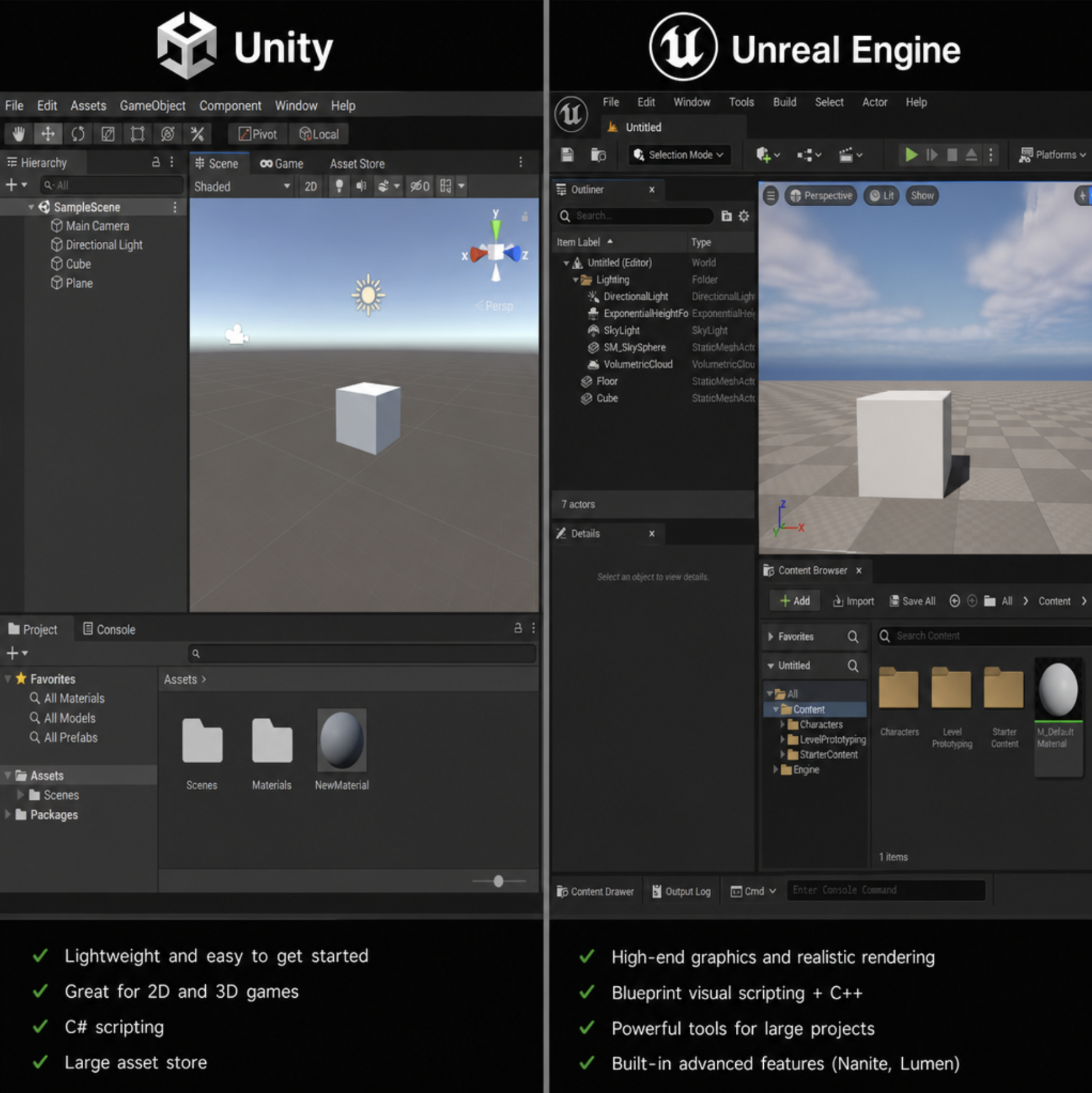
If you are just starting, you will likely weigh Unity vs Unreal Engine for beginners.
Unity: Incredibly versatile and boasts a massive community. It is fantastic for both 2D and 3D projects and operates using C#.
Unreal Engine: Known for hyper-realistic graphics and its powerful "Blueprint" visual scripting system, making it easier for non-programmers to build complex logic.
Godot or GameMaker: If your project is strictly two-dimensional, these are widely considered the best engines for 2D platformers due to their lightweight, pixel-perfect rendering capabilities.
If you are looking for an even gentler learning curve, beginner friendly game creation software like Construct 3 or RPG Maker allows you to build entire projects with minimal coding. Some platforms are so gamified that using them feels like playing a video game creator game, making the development process highly interactive and fun.
## The Rise of AI in Game Development
The industry is currently experiencing a technological renaissance. You might decide to experiment with an ai game engine to streamline your workflow. Utilizing an ai 3d game maker with code allows developers to prompt the engine to generate boilerplate scripts, complex algorithms, or foundational mechanics in seconds. Furthermore, experimental 3d pc game maker ai software is beginning to emerge, allowing solo developers to generate entire 3D environments just by typing descriptive text.
Step 3: Programming and Logic
Once your engine is selected, you need to bring your mechanics to life. A common question newcomers ask is: "what programming language should I learn for games?" The answer depends largely on your engine:
- C# (C-Sharp): The standard for Unity and Godot. It is highly readable and excellent for beginners.
- C++: The backbone of Unreal Engine. It is harder to master but offers unparalleled performance.
- Python: Great for backend server logic or developing custom game development tools.
You don't necessarily have to be a master coder to succeed. Visual scripting (node-based logic) is perfectly viable for completing full projects. The key is to start small. Build a prototype where your character can simply move and interact with an object before trying to code a complex inventory system.
## Step 4: Art, Audio, and User Experience
A game's aesthetic and soundscape are what hook a player initially, while a seamless interface keeps them playing.
### Gathering Assets
You don't have to be a professional artist or composer. Sourcing royalty free game assets is a standard practice for indie developers. Websites like the Unity Asset Store, Unreal Marketplace, Kenney.nl, and OpenGameArt offer thousands of free or affordable 3D models, 2D sprites, sound effects, and music tracks.
Alternatively, some developers are testing the waters of creating an ai generated game prototype, using AI art generators for concept art or AI audio tools to create dynamic background ambient noises.
### UI and UX Design
Never underestimate user interface and experience design. Your menus, health bars, inventory screens, and HUD (Heads Up Display) must be intuitive. Good UX means the player instantly understands how to navigate your game without requiring a lengthy tutorial. Keep fonts legible, use contrasting colors for critical information, and ensure button feedback (like a click sound or visual highlight) is satisfying.
## Step 5: Level Design and Pacing
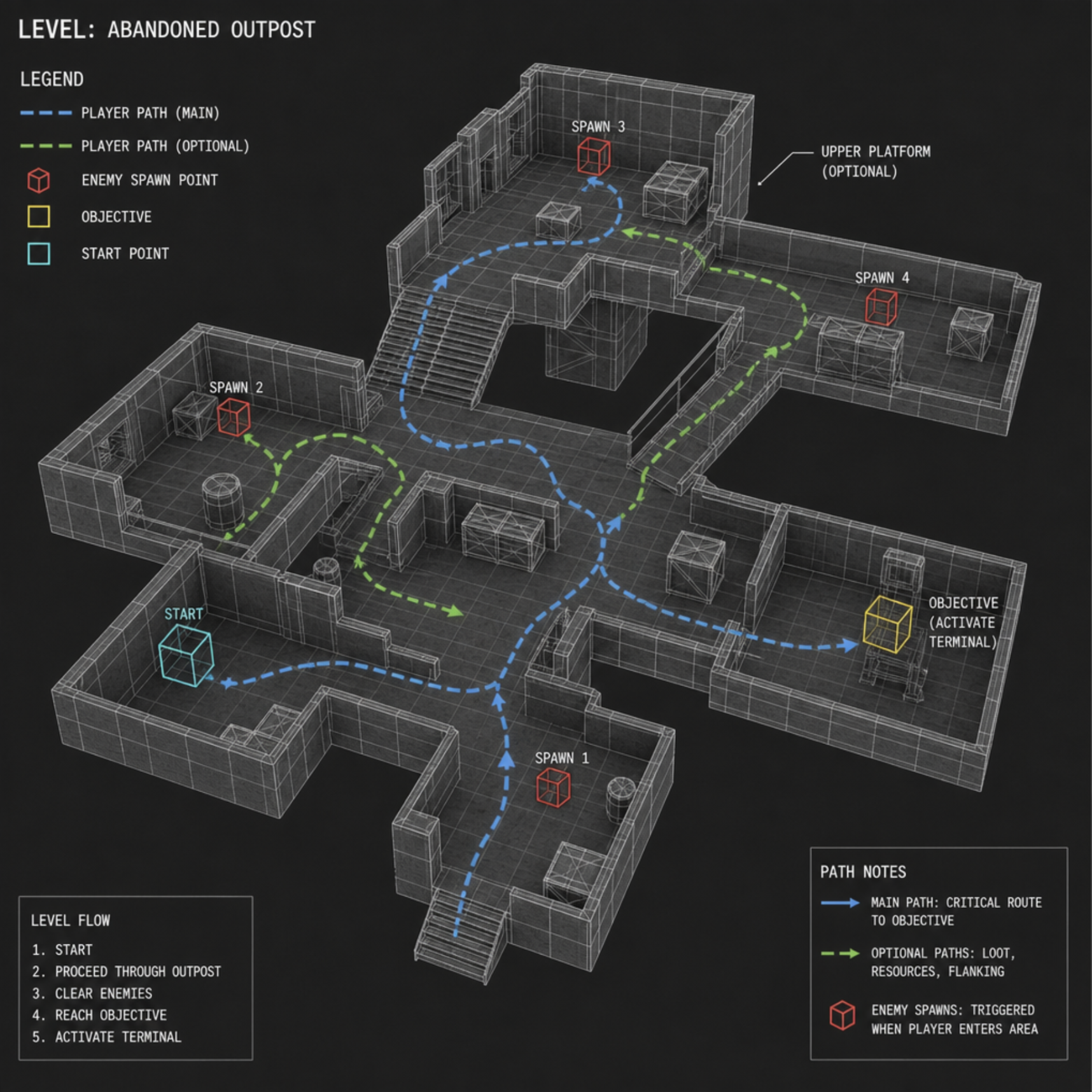
With your mechanics working and your art in place, it's time to build the actual stages. Applying proper level design principles for playability is what separates a frustrating experience from an addictive one.
- Teach, then test: Introduce a new mechanic in a safe environment. Once the player understands it, present a challenge that requires them to use it.
- Visual language: Use lighting and color to guide the player's eye. A brightly lit doorway in a dark room naturally draws the player toward the objective.
- Pacing: Alternate between moments of high tension (combat, difficult platforming) and low tension (exploration, story dialogue) to prevent player fatigue.
## Step 6: Testing and Quality Assurance
No project is perfect on the first build. A critical phase in the development lifecycle is quality assurance and playtesting.
Do not rely solely on yourself to test your work. Because you built it, you know exactly how to solve the puzzles and defeat the enemies. Bring in fresh eyes. Watch friends, family, or online community members play your build without offering them any hints.
- Take note of where they get stuck.
- Observe mechanics they ignore.
- Log every bug, glitch, and crash.
Iterate on this feedback constantly. Trimming away frustrating elements and polishing the mechanics based on actual user data is what transforms a good concept into a great experience.
## Step 7: Publishing, Monetization, and Marketing
Your game is finally finished! Now, how do you get people to play it—and perhaps make a living from it?
### Choosing a Monetization Strategy
If you are targeting smartphones, you must understand mobile game monetization models. The mobile market rarely supports premium (pay-upfront) titles. Instead, consider:
- In-App Purchases (IAPs): Selling cosmetics, extra levels, or battle passes.
- Ads: Rewarded video ads (e.g., "Watch this ad to double your coins") are highly effective and generally preferred by players over forced pop-up ads.
- Freemium: Offering the base experience for free, but charging to unlock the full story.
For PC and console, premium pricing (paying a flat fee for the full game) is still the standard.
### Publishing Your Title
Publishing games on digital storefronts requires preparation. Platforms like Steam, the Epic Games Store, the Apple App Store, and Google Play have specific submission guidelines, review processes, and fees. For Steam, you will need to set up a developer account, pay a small publishing fee (which is recoupable), and create a compelling store page with a polished trailer and screenshots.
### Marketing Your Masterpiece
Simply uploading your title to a storefront is not enough. Thousands of titles are released daily. To stand out, you must execute clever indie game marketing strategies months before launch.
- Start a Devlog: Document your journey on YouTube or a blog. Players love seeing behind-the-scenes content.
- Leverage Short-Form Video: TikTok, Instagram Reels, and YouTube Shorts are currently the most powerful organic reach tools for indie developers. Show off satisfying mechanics or funny bugs.
- Build a Community: Start a Discord server early. Let your early fans participate in beta testing.
- Gather Wishlists: On platforms like Steam, wishlists are the most valuable metric. The more wishlists you have prior to launch, the more the platform's algorithm will promote your title on release day.
## Conclusion
Learning how to make a game is a marathon, not a sprint. By breaking the process down—from conceptualizing your game design document to mastering the tools, iterating through playtesting, and finally executing a smart marketing launch—you turn an overwhelming mountain into a series of manageable steps.
Embrace the inevitable bugs, be open to player feedback, and don't be afraid to utilize modern advancements like AI tools to streamline your workflow. The world is waiting for your unique vision. Open your game engine of choice, write that first line of code, and start building your universe today!