Mastering the Game Dev Simulator Genre: A Deep Dive
Dive into the game dev simulator genre, where you can manage a virtual game studio, design games, and build an indie or AAA empire. Discover strategies and history in this engaging niche.
July 17, 2026 · Industry Trends
## Exploring the Game Dev Simulator Genre
Have you ever looked at the latest blockbuster video game release, noted its flaws, and thought to yourself, "I could run a studio better than that"? If so, you are not alone. The desire to pull back the curtain on the gaming industry has fueled the massive popularity of the game dev simulator genre. These games allow you to step into the shoes of a studio CEO, making critical decisions about design, staffing, technology, and marketing, all while trying to keep your virtual company out of bankruptcy.
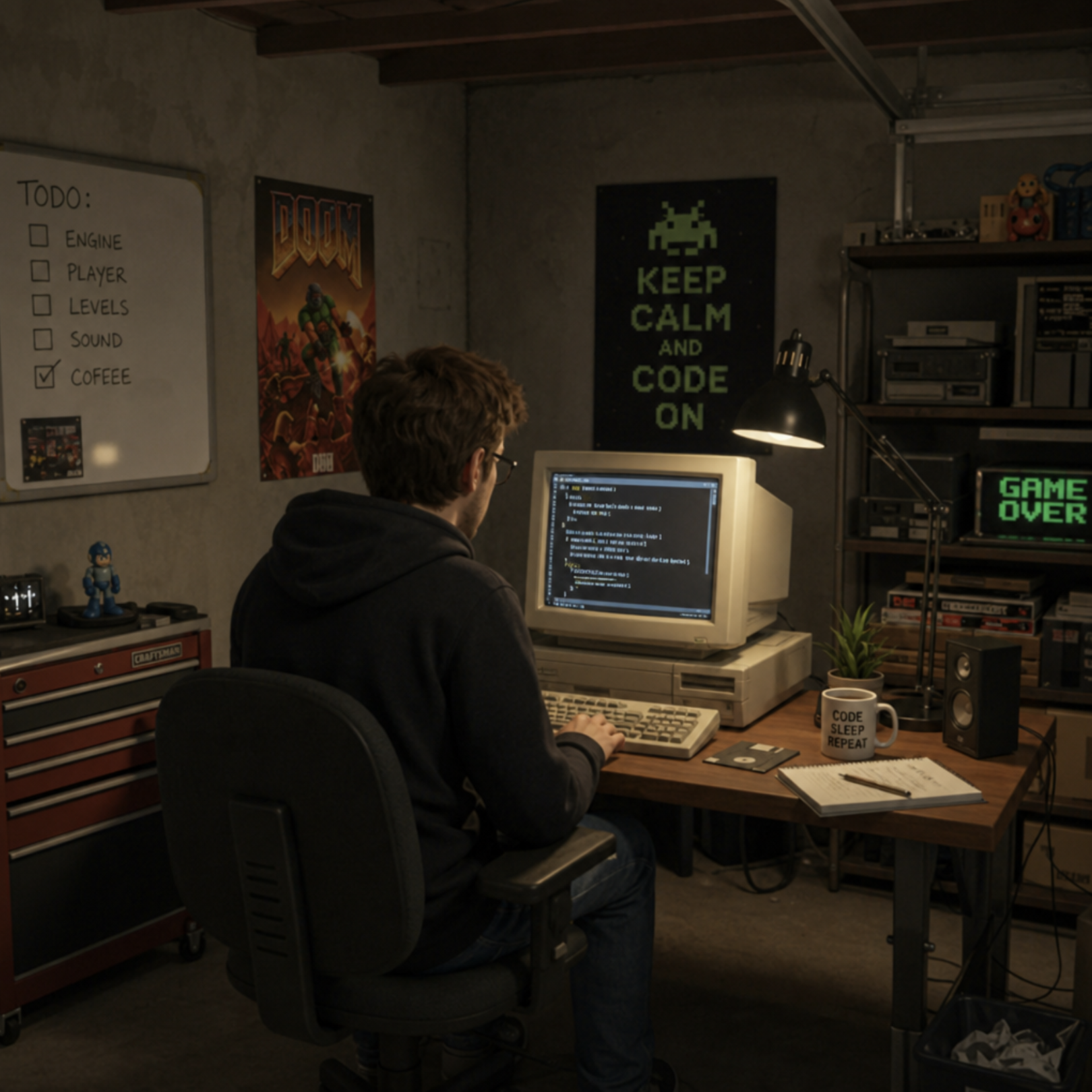
Whether you dream of being a scrappy indie game dev working out of a dusty garage or the executive of a massive AAA corporation, this niche of management games offers a deeply satisfying experience. Let us dive deep into the mechanics, history, and strategies that define the game dev simulator genre, and explore how you can turn your virtual startup into an industry titan.
## The Rise and Evolution of the Genre
The concept of a game development simulator isn't entirely new, but its modern popularity owes a massive debt to the mobile and casual gaming boom. To understand where we are today, we have to look at the evolution of the Kairosoft tycoon formula. When Kairosoft released Game Dev Story to global audiences, it captivated players with its charming pixel art and highly addictive, albeit simplified, simulation elements. You hired staff, picked a genre, and waited to see if the gaming press loved or hated your creation.
From those humble mobile beginnings, developers saw the potential for deeper, more complex systems. The evolution of video game studio management sims brought us beloved PC titles like Greenheart Games' Game Dev Tycoon, which introduced more nuanced sliders for development phases, tech progression, and anti-piracy mechanics.
Today, the genre has expanded into highly intricate macroeconomic simulations. A modern game studio simulator doesn't just ask you to pick a game topic; it requires you to manage server infrastructure, negotiate publishing deals, and build custom offices brick by brick.
## Decoding the Core Gameplay Loop
At its heart, the core gameplay loop of game industry sims is a satisfying cycle of risk, creation, and reward. Typically, you begin with limited funds, basic technology, and a small team (often just your player character).
The cycle generally flows like this:
1. Ideation: Selecting a topic (e.g., Sci-Fi, Fantasy) and a genre (e.g., RPG, Action).
2. Development: Allocating resources across different phases of the game's creation. You must decide whether to focus heavily on engine tech, level design, or game art, depending on what your chosen genre requires.
3. Release & Review: Launching the game, receiving critic scores, and watching the sales roll in.
4. Reinvestment: Using your profits to train staff, upgrade your office, and research new technologies.
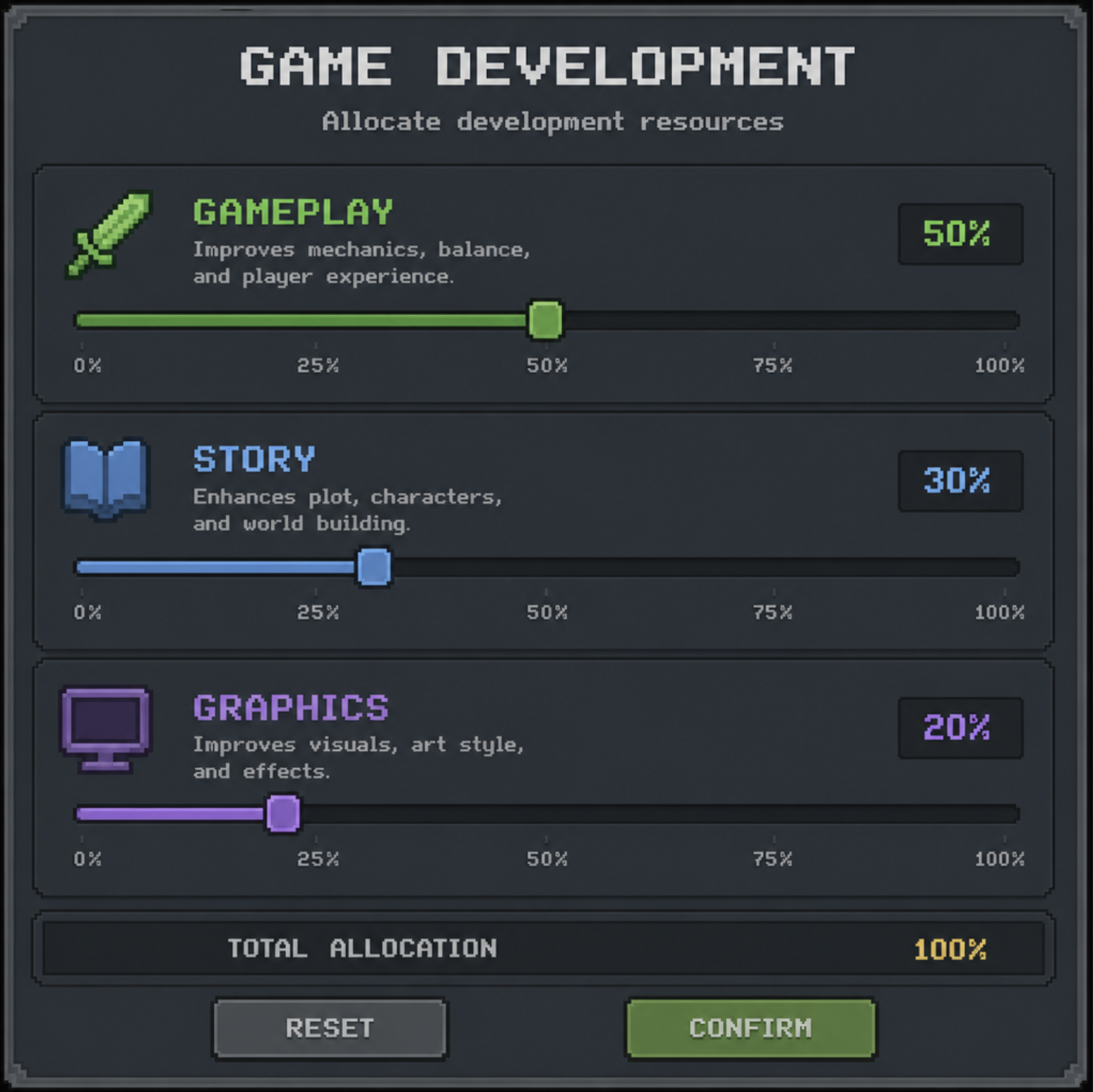
To excel in any game design simulator, you must master the underlying systems governing this loop. One of the most critical aspects is understanding game engine research mechanics. As in-game years progress, the industry moves from 2D pixels to 3D graphics, VR, and beyond. If you do not invest your early profits into researching better game engines, your titles will quickly become obsolete, and critics will pan your outdated technology.
## Strategies for High Scores and Blockbuster Sales
Building a good game is easy; building an industry-defining masterpiece takes strategy. Here are actionable tips for dominating your virtual market:
- Master the Match-Up: A major hurdle for new players is figuring out how to balance game themes and genres for high scores. A "Cyberpunk" theme pairs brilliantly with an "Action" or "RPG" genre, but combining "Medieval" with "Cyberpunk" might yield terrible reviews. Keep a notebook or mental log of what combinations yield the highest synergy.
- Ride the Wave of Hardware: Always pay attention to the impact of platform trends on virtual sales. Releasing a game exclusively on a console that is losing market share is a success-killer. Always pivot your development to the consoles with the highest active user base, or create your own console later in the game.
- Hype is Everything: A great game will not sell if nobody knows about it. Mastering the art of optimizing marketing campaigns for virtual game launches is essential. Start your marketing mid-way through development with magazine ads, build hype with beta releases, and push massive TV campaigns right before launch.
## Scaling Up: From Garage to Global Studio
Every player begins with the same goal: making it out of the starter office. However, figuring out how to scale from indie to AAA in simulators is where many virtual CEOs face bankruptcy. Scaling up requires more than just money; it requires structural shifts in how you play.

When you expand to a larger office, your overhead costs skyrocket. You can no longer survive by releasing small, cheap games. You must take on contract work to keep the lights on while developing larger projects. Furthermore, scaling requires you to implement robust project management strategies for virtual game studios. You must divide your workforce into specialized teams: a dedicated programming team fixing bugs, an art team churning out high-res assets, and a marketing team running continuous ad campaigns.
### Taking Care of Your Team
As your headcount grows, human resources become a pivotal gameplay mechanic. One of the most overlooked aspects of these games is managing employee burnout in virtual game development. If you force your staff to "crunch" on a massive MMO for three years straight without breaks, their morale will plummet. In advanced simulators, low morale leads to reduced efficiency, a higher frequency of game-breaking bugs, and staff resigning mid-project.
To combat this, invest in your office environment. Build break rooms, provide free espresso machines, ensure good lighting, and offer generous vacation policies. A happy developer codes faster and produces better work.
## Comparing the Heavyweights: Which Sim is for You?
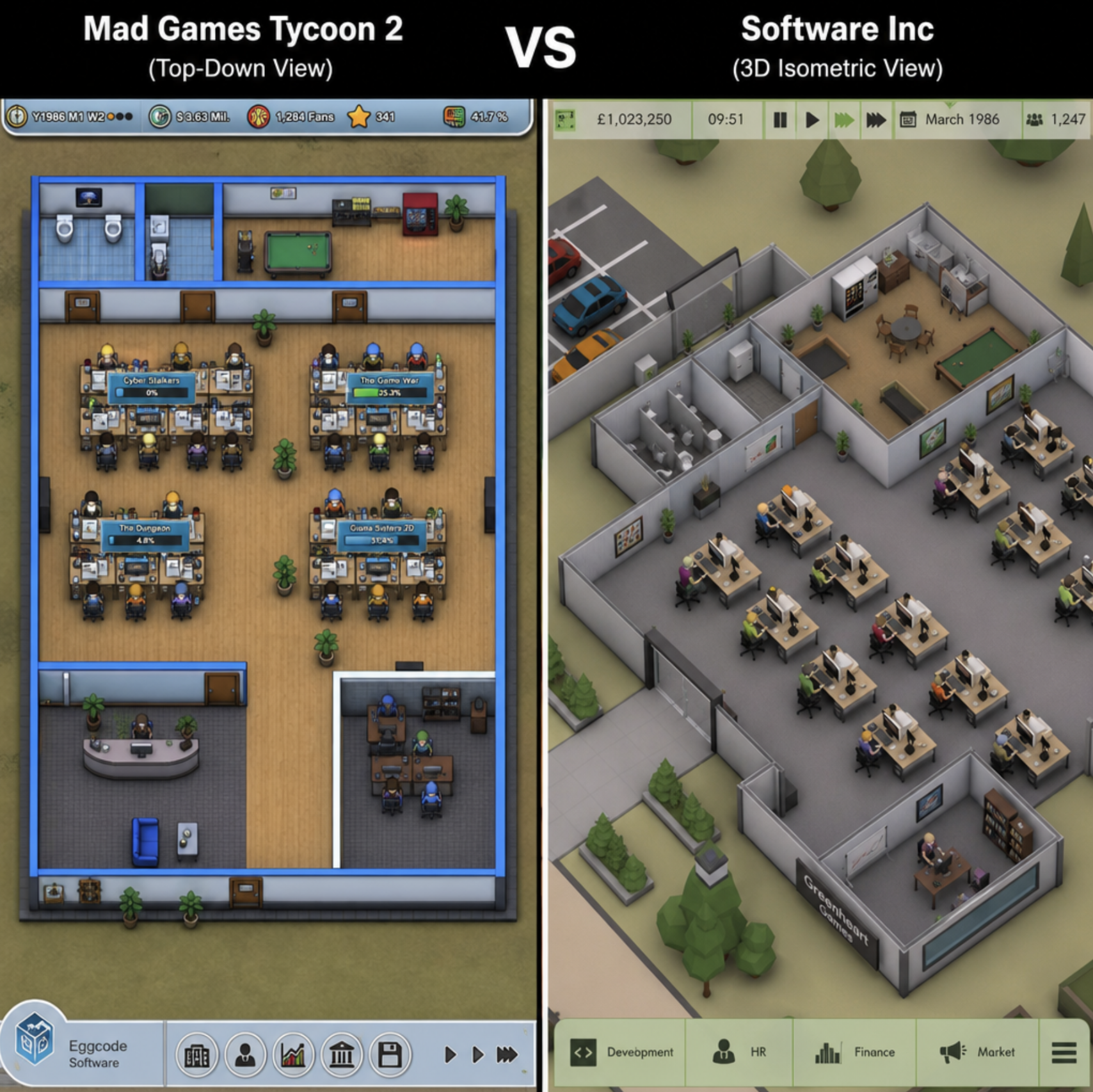
If you are looking to dive into the market, you will quickly notice a few titles dominating the charts of top-rated software studio simulators on Steam. Two of the most intricate and popular choices are often pitted against one another in community debates: Software Inc vs Mad Games Tycoon 2.
Software Inc. While not strictly limited to video games (you can build operating systems, audio tools, and antivirus software), Software Inc. is a masterclass in corporate simulation. It features an incredibly complex architectural building system. You manage everything from the HVAC systems and server cooling to assigning team leaders and managing company stocks. It is one of the best indie tycoon games for future developers who want a deep, almost spreadsheet-like level of control over business logistics and product iterations.
Mad Games Tycoon 2 If you want an experience laser-focused entirely on the gamedev lifestyle, Mad Games Tycoon 2 is a perfect choice. It allows you to build out highly specific rooms like motion capture studios, sound recording booths, and arcade cabinet manufacturing lines. It perfectly captures the history of the industry, challenging you to survive video game crashes and adapt to the rise of mobile gaming.
Both games offer hundreds of hours of playtime, but your choice depends on whether you prefer deep corporate management (Software Inc. ) or a rich, historically themed gaming industry sandbox (Mad Games Tycoon 2).
## The Reality Check: Art Imitating Life?
With all these intricate mechanics, a common question arises: are studio simulation games realistic?
The short answer is no, but they capture the feeling perfectly. Real-world game development is a highly chaotic, iterative process filled with creative disagreements, unforeseen technical limitations, and shifting publisher demands. A real development cycle cannot simply be fixed by moving a slider 10% more toward "Gameplay" and away from "Story."
However, simulators successfully gamify the broad strokes of the industry. They accurately reflect how terrifying it is to launch a product after years of investment, only to pray that the review embargo lifts to favorable scores. They capture the financial strain of expanding a business and the constant technological arms race of building new software engines.
This satisfying abstraction explains why tycoon games appeal to creative players. They offer the fantasy of creative control without the literal years of coding headaches. You get to be the visionary—the person who decides that a vampire-themed kart racer is exactly what the market needs, and you get to feel the sheer dopamine rush when the virtual market proves you right.
## Conclusion
The game dev simulator genre has grown from simple, charming mobile clickers into incredibly deep management sandboxes. They tap into a unique meta-desire: the gamer's dream of peering behind the curtain and controlling the very industry that provides their entertainment.
Whether you are carefully balancing genres to appease virtual critics, designing state-of-the-art server rooms, or rescuing your team from a grueling crunch period, these games offer a uniquely rewarding challenge. By mastering your marketing campaigns, understanding technological research, and managing your staff effectively, you can build a virtual studio whose legacy will stand the test of time. So, fire up your PC, claim your digital garage, and start coding—your virtual blockbuster awaits.